
B8 use class explained
The B8 use class is the planning category for storage and distribution in England, and it is the engine room of the modern logistics economy. Class B8 of the To

Key takeaways
- B8 is the use class for storage or use as a distribution centre in England, and since 2020 it expressly includes open air storage.
- It is the deepest-demand industrial consent in most markets, from national parcel hubs to a tradesman storing materials, which is why B8 stock prices keenly.
- B8 still exists, as do B2 general industrial; only the old B1 class was abolished in September 2020 and folded into Class E.
- Permitted development allows some movement between B2, B8 and E(g)(iii) within floorspace limits, but conditions and Article 4 directions often override it.
- B8 on a brochure is a claim, not a fact: check the planning history before you rely on it. We arrange finance, we are not a lender or a planning adviser.
The B8 use class is the planning category for storage and distribution in England, and it is the engine room of the modern logistics economy. Class B8 of the Town and Country Planning (Use Classes) Order 1987, as amended, covers use for storage or as a distribution centre, and since the 2020 amendments it expressly includes open air storage. If the dominant activity in a building or on a site is goods at rest and goods in motion, rather than goods being made, the use is generally B8.
This guide explains what B8 covers and what it does not, how it sits against B2 general industrial and the light industrial limb of Class E, the permitted development rights that allow movement to and from B8, the ancillary office and trade counter questions that generate so much confusion, and why the use class matters so much to what a unit is worth and how it is financed. We arrange finance on industrial and logistics property as a broker and introducer, not a lender, and we are not planning consultants; for any specific building take planning advice, because this is general information only.
What is a B8 warehouse use?
A B8 use is use of a building or land for storage or as a distribution centre. In practice that captures warehouses, parcel and fulfilment hubs, trade and wholesale distribution depots, cold stores, self storage and yards holding goods, vehicles or materials. The defining feature is that the principal activity is holding and moving goods, not manufacturing them. A unit can look identical to a B2 or E(g)(iii) unit from the road; the class comes from what is lawfully done inside, not from the cladding.
Case law has settled some useful edges. The principal use is what counts: a site does not have to be a storage business in the commercial sense for its use to be B8, as long as storage is the principal use, which is why even the storage of classic cars away from a home can be a B8 use despite a building that looks like a garage. The 2020 inclusion of open air storage within B8 also clarified a long-running question, although large-scale open storage as a use in its own right can still fall outside B8 and into sui generis on the particular facts, as covered in our work on the open storage yards market.
Does use class B still exist?
Partly, and this is the single most common point of confusion. The old class B was split into B1 business, B2 general industrial and B8 storage and distribution. The September 2020 reforms abolished B1 entirely and moved its contents into the new commercial Class E, as E(g)(i) offices, E(g)(ii) research and development and E(g)(iii) light industrial. B2 and B8 survived unchanged in name and substance. So when someone asks whether class B still exists, the accurate answer is that B2 and B8 do, but B1 does not, and references to B1 in older leases and particulars now need translating into the Class E equivalents.
This matters because a great deal of the market still talks in pre-2020 language. A lease describing a unit as B1(c) is describing what is now E(g)(iii); a brochure offering B1/B8 flexibility is offering E(g)/B8 flexibility in current terms. Reading the old labels correctly is now part of basic document literacy in industrial property, and getting it wrong can lead a buyer to misjudge what changes of use are and are not permitted. Our existing guide to industrial planning use classes sets the full history out.
| Pre-September 2020 | From September 2020 | Status |
|---|---|---|
| B1(a) offices | E(g)(i) | Moved into Class E |
| B1(b) research and development | E(g)(ii) | Moved into Class E |
| B1(c) light industrial | E(g)(iii) | Moved into Class E |
| B2 general industrial | B2 | Unchanged |
| B8 storage and distribution | B8 | Unchanged, open air storage now express |
What is the difference between B2, B8 and Class E light industrial?
B2 is general industrial: the carrying on of an industrial process other than one that meets the light industrial test. In practice it is manufacturing with externalities, processes involving noise, vibration, fumes, dust or smell that could not sit next to housing. B8 is storage and distribution, where the dominant activity is goods at rest and in motion. E(g)(iii) light industrial is industrial process that can be carried out in a residential area without detriment to its amenity, which is the functional test that separates light industrial from B2.
The boundaries are functional, not physical, and the same shed can host different classes over its life. A unit can drift from E(g)(iii) to B2 as a business adds noisier kit, and a warehouse can sit in B8 until processing becomes significant enough to make part of it B2. Because the lawful use turns on activity and planning history rather than the building, the only safe way to establish it is the planning register and, where needed, a certificate of lawfulness, not an inspection of the unit.
The label on the door tells you nothing about the use class; the planning history tells you everything.
For investors and occupiers the difference is commercial. B8 typically carries the deepest occupier demand in logistics-strong markets, which supports keen pricing and short voids. B2 can carry a scarcity premium where general industrial land is constrained and protected by local plan policy. E(g)(iii) sits within the flexible Class E, which is attractive, but planning conditions frequently narrow that flexibility on employment estates. The relative pricing flows straight through to the yields each commands.
What is B2 to B8 permitted development?
Permitted development rights under the General Permitted Development Order allow certain changes between industrial classes without a full planning application, subject to limits and conditions. Long-standing rights allow change from B2 to B8 and from B8 to B2, and from E(g)(iii) light industrial to B8, historically subject to a floorspace cap on moves into B8 and to prior approval or notification requirements in some cases. Movement within Class E itself, for instance E(g)(iii) to E(g)(i), is not development at all and needs no permission, subject to conditions.
These rights come with traps that defeat the unwary. Many are disapplied where an Article 4 direction has removed them, which is increasingly common on planned employment areas. A planning condition on the original consent restricting the use of the unit generally overrides the permitted development right entirely. Floorspace limits bite on exactly the mid-sized units this site covers. And the rules are amended frequently, so a right that existed when a guide was written may have changed. None of this should be relied on from an article, including this one, without confirming the current position on the specific unit with a planning consultant.
Why does B8 status matter to value and finance?
B8 status matters because it defines the pool of occupiers a unit can lawfully serve, and through that pool its rental market, its void risk and its value. In most UK markets B8 is the most demanded industrial consent, because distribution occupiers from national parcel networks down to local trades compete for the same well-located stock. A clean B8 consent therefore tends to support the strongest rents, the shortest voids and the deepest resale market, the qualities valuers and lenders price most generously.
Lenders translate that into terms. Broad, unconditioned B8 use supports the fullest loan to values and the keenest pricing on a commercial mortgage, because the security has a wide alternative-occupier market if the loan ever has to be enforced. A narrowly conditioned B8, a personal or temporary consent, or a use that is really sui generis dressed as B8, shrinks that market and pushes leverage down and pricing up. The use class and the loan terms are two views of the same risk.
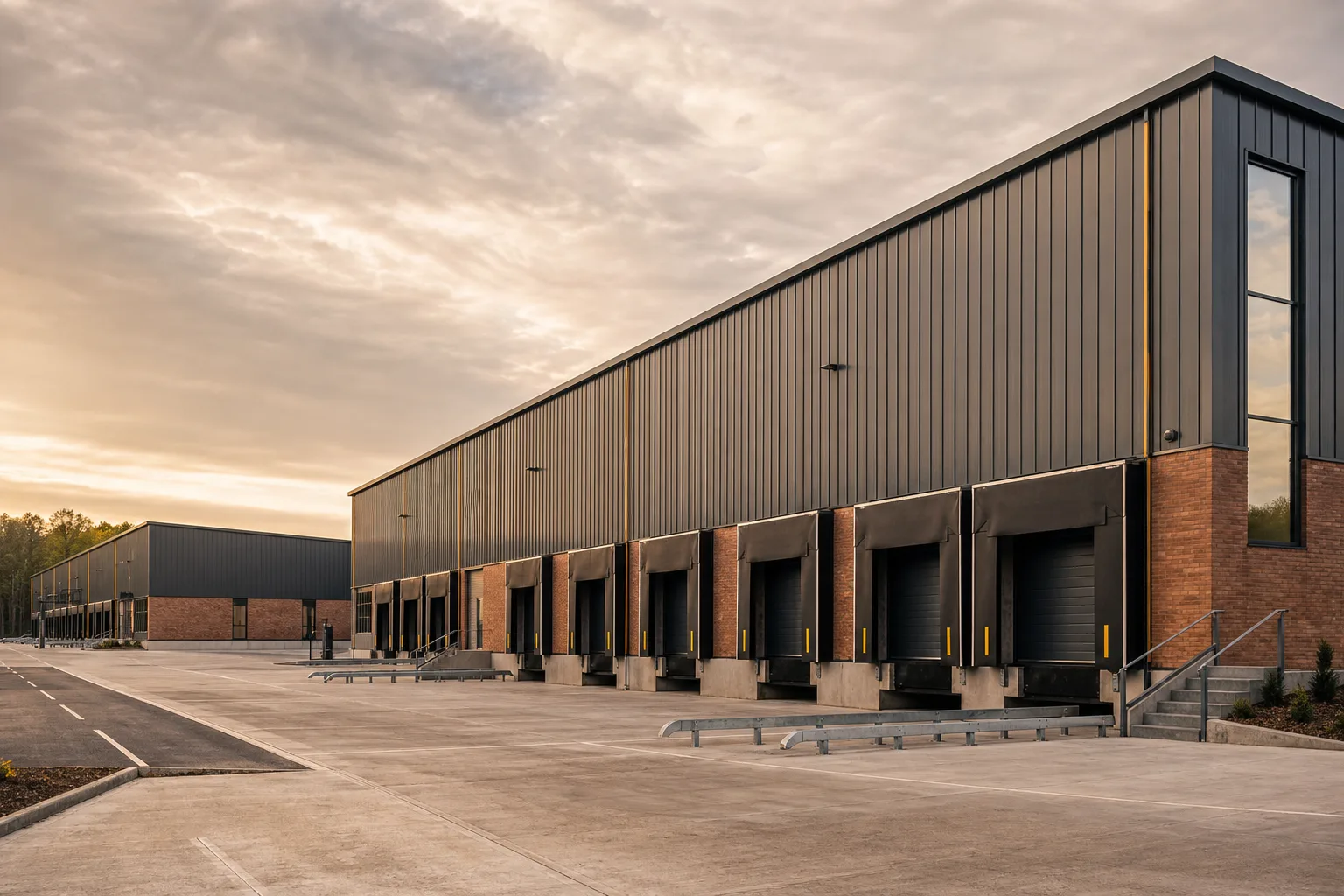
The practical takeaway is to treat a B8 claim as something to verify, not accept. Establish the lawful use from the planning history, read every condition, and check for any Article 4 direction. A unit with genuinely clean, broad B8 use is worth paying for because it finances and sells better, and we see the difference in lender appetite on almost every distribution and logistics warehouse we arrange finance against. Our commercial mortgage page sets out how that debt is typically built.
B8 Use Class Explained: Storage and Distribution: common questions
What is a B8 warehouse use?
A B8 use is use for storage or as a distribution centre in England, and since 2020 it expressly includes open air storage. It covers warehouses, parcel and fulfilment hubs, trade and wholesale distribution, cold stores, self storage and yards holding goods or vehicles, where the principal activity is holding and moving goods rather than making them. An office or shop ancillary to the warehouse is generally part of the B8 use, but dominant public retail sales can tip the use out of B8.
Does use class B8 still exist?
Yes. B8 storage and distribution still exists, as does B2 general industrial. Only the old B1 business class was abolished, in September 2020, and folded into the new commercial Class E as E(g)(i), E(g)(ii) and E(g)(iii). So references to B1 in older documents now need translating into Class E, but B2 and B8 survive unchanged in name and substance.
What is B2 to B8 permitted development?
Permitted development rights under the General Permitted Development Order allow change from B2 general industrial to B8 storage and distribution, and the reverse, without a full planning application, subject to floorspace limits and conditions. Change from E(g)(iii) light industrial to B8 is also possible within limits. These rights are often removed by Article 4 directions or overridden by planning conditions, and the rules change frequently, so confirm the current position on the specific unit with a planning consultant before relying on it.
Is a trade counter B8?
Often, but not always. A trade counter where goods are stored and sold mainly to trade customers usually operates as B8 with an ancillary sales element. If retail sales to the general public become the dominant activity, the use can tip out of B8 into a retail category, which is why many trade units carry planning conditions controlling the balance. Check the conditions on the specific unit rather than assuming the class from the trade counter format.
Ready to talk about a real deal?
Send us the deal and we will come back with a view on fundability and likely terms within one working day.