Distribution and logistics warehouse finance
Funding for big-box and mid-box distribution warehouses, logistics units and fulfilment space, sized on rent, covenant strength, unexpired term and interest cover.

Funding distribution & logistics
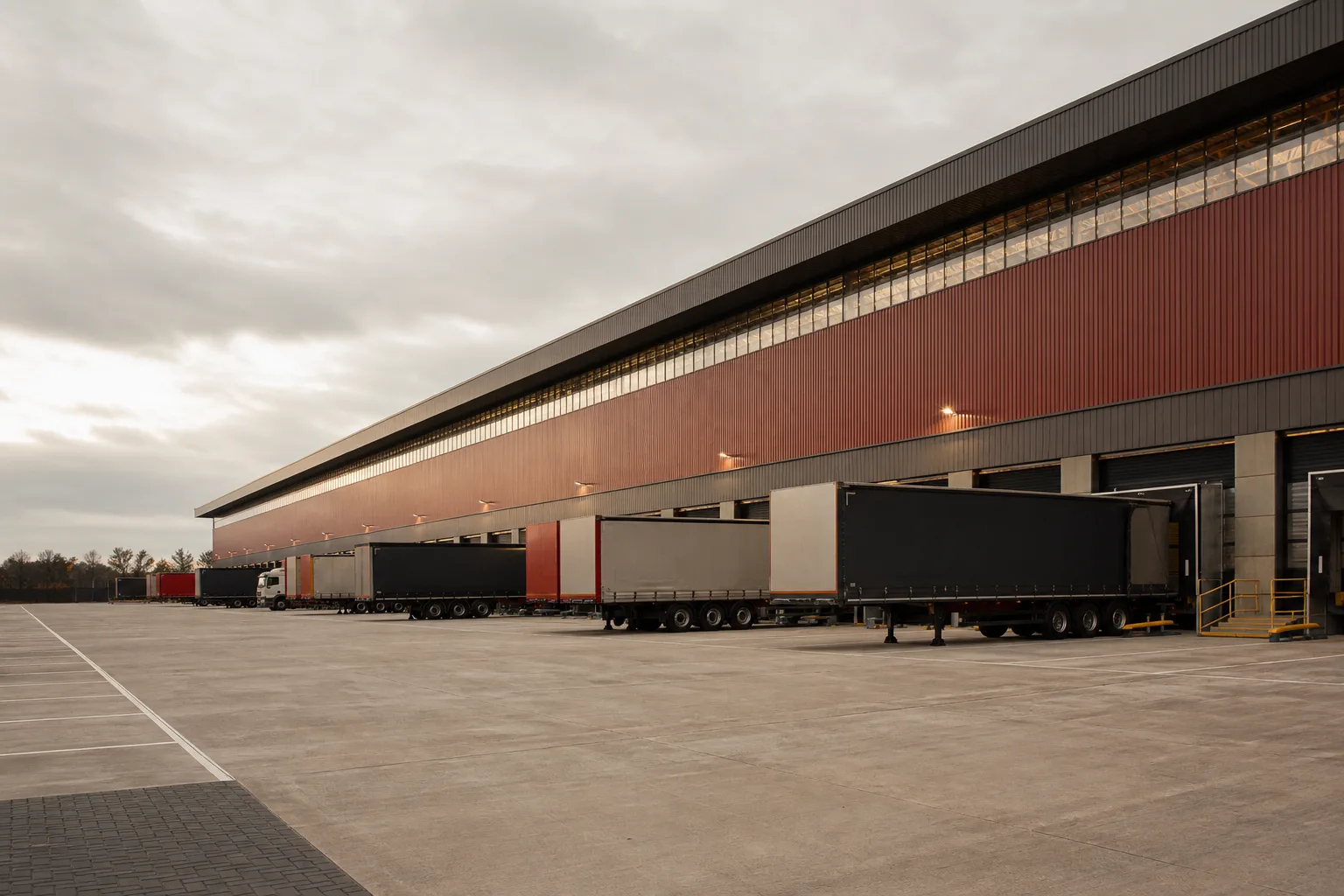
A distribution or logistics warehouse is a large single-let shed built for the movement of goods rather than for making them: high eaves, wide column grids, dock and level-access loading, generous yard depth for articulated lorries and, increasingly, the power capacity to run automation. The category covers big-box distribution units, mid-box regional warehouses, dedicated fulfilment centres and cross-dock facilities, broadly units of 50,000 sq ft and above, let to third-party logistics operators, retailers and manufacturers on institutional leases. This is the upper end of the industrial umbrella, where a single tenant and a single lease usually carry the whole income.
The lending case rests on the income and the building in roughly equal measure. A modern shed let to a strong covenant on a long lease reads to investors and lenders almost like a bond secured on bricks, while the asset itself, well specified and well located near the motorway network, holds re-letting and alternative-occupier appeal if the tenant ever leaves. We arrange investment mortgages, owner-occupier facilities, development funding and forward-funding against distribution and logistics warehouses, acting as arranger and introducer to lenders, not as a lender ourselves.
What we fund
- Big-box distribution units broadly 50,000 sq ft and above on institutional leases
- Mid-box regional warehouses serving distribution and trade catchments
- Fulfilment and e-commerce centres let to retailers and 3PL operators
- Cross-dock and transit facilities on motorway and trunk-road corridors
- Owner-occupied distribution and production warehouses for manufacturers
- New sheds funded through development or forward-funding to an agreed tenant
Indicative terms
- Typical lot size£5m to £75m and above per unit (indicative)
- Investment LTVUp to 60 to 70 percent of valuation (indicative)
- Term ratesFrom around 6 percent (indicative)
- Development and forward-fundingSized on cost and pre-let covenant (indicative)
Indicative only. Terms vary by lender, asset and borrower and are not an offer of finance.
Financing a distribution or logistics warehouse
We arrange debt across the situations a logistics shed produces. For an investor buying a let warehouse we source investment commercial mortgages sized on the passing rent, with leverage and pricing driven by the strength of the covenant, the unexpired term and interest cover on the income, indicatively up to 60 to 70 percent loan to value at rates from around 6 percent. For a manufacturer or distributor buying its own warehouse we arrange owner-occupier funding underwritten on the trading business rather than a tenant's lease. For new stock we arrange development finance to build the shed and forward-funding where an institution buys the completed, let investment ahead of practical completion against an agreed tenant. For the very largest big-box assets we work alongside our sibling site Warehouse Property Finance. We act as arranger and introducer to lenders, not as a lender ourselves.
How lenders underwrite distribution and logistics income
Single-let logistics income is underwritten on the covenant and the lease before the building. The tenant's financial strength sets the tone, since one occupier carries the whole rent: a warehouse let to an investment-grade retailer or a well-capitalised 3PL supports fuller leverage and keener pricing than the same shed let to a weaker covenant. Lenders then read the unexpired term, because a long lease with upward-only or indexed reviews underpins the income through the loan, and they test interest cover on the passing rent with headroom for a rate stress. The building is the fallback rather than the lead, but it matters: eaves height, loading configuration, yard depth, power supply and motorway access decide how readily the unit would re-let or sell if the covenant failed. With UK prime distribution and logistics yields around 5.00 percent on long income (Knight Frank, January 2026), the asset class sits firmly inside institutional and bank appetite, and placing each deal with the credit team that prices that covenant and that lease correctly is most of the outcome.
The market for distribution and logistics warehouses
Distribution and logistics is the most heavily traded part of UK industrial property, which gives every funded asset a deep exit. Big-box take-up reached 25.6m sq ft in 2025, up 22 percent on the year (CBRE, Q4 2025), prime big-box rent stood at £11.90 per sq ft and rose 5.2 percent (Colliers, H2 2025), and rents run far higher in supply-constrained markets, around £27.50 per sq ft in the South East (CBRE), while the East Midlands Golden Triangle remains the logistics heartland. That occupier demand supports the investment market behind every shed: a let warehouse can sell to institutions and logistics REITs that buy long income, refinance onto term debt as reviews lift the rent, or be held through the lease. Vacancy of 7.08 percent (CBRE, Q4 2025) is a reminder that re-letting is not automatic, which is why the building's specification and location, not just the lease, sit in every funding case we present.
Finance that suits this asset class
- Commercial mortgagesInvestment and owner-occupier term debt sized on rent, covenant and cover.
- Acquisition financeFunding purchases of let logistics warehouses to deadline.
- Development financeBuilding new sheds, with forward-funding against an agreed tenant.
- RefinanceRe-gearing onto term debt as reviews lift the rent and value.
- Portfolio financeCross-collateralised facilities across multiple distribution assets.
Useful calculators
Related guides
Fund a distribution & logistics deal
A view on fundability within one working day.
What counts as a distribution or logistics warehouse?
We treat the category as single-let sheds built for storage and the movement of goods, broadly 50,000 sq ft and above, where one occupier typically takes the whole building on one lease. Within that band sit several formats: the big-box distribution unit running into hundreds of thousands of sq ft serving national supply chains, the mid-box regional warehouse handling a catchment, the dedicated fulfilment centre picking and packing e-commerce orders, and the cross-dock facility built for goods to flow through rather than be stored. The occupiers are third-party logistics operators, retailers running their own distribution, and manufacturers warehousing finished product.
The defining features are physical and locational. High eaves let occupiers store goods vertically and install racking or automation, dock-level and level-access doors handle articulated lorries, deep yards allow trailers to manoeuvre and park, and heavy power supply increasingly decides which automated operations a unit can host. Location does as much work as the building, since logistics is about reaching the road network and the population quickly, which is why the East Midlands Golden Triangle, the North West around Warrington and the major motorway junctions command the strongest occupier demand and the firmest rents.
For the very largest big-box assets, the single sheds measured in the high hundreds of thousands of sq ft, our sibling site Warehouse Property Finance leads, and we work alongside it. Across the mid-box and big-box range covered here, the funding turns on the covenant, the lease and the specification, which is what the rest of this page sets out.
How do lenders size debt on a let logistics warehouse?
The starting point is the covenant. A single-let shed lives or dies on one tenant, so lenders read that tenant's accounts closely and size leverage to the strength they find: a warehouse let to an investment-grade retailer or a substantial 3PL supports leverage toward the top of the indicative 60 to 70 percent range, while a weaker or unrated occupier pulls the advance down and the margin up. The unexpired term sits alongside the covenant, because a long lease with upward-only or index-linked reviews secures the income through the loan and supports a fixed rate against it, whereas a short unexpired term raises a refinancing-date question the lender will price.
Interest cover then binds the loan. Lenders test that the passing rent covers interest with a margin that survives a rate stress, so a shed let at a full institutional rent supports more debt than the same shed let cheaply, and indexed reviews that lift the rent through the term feed directly into borrowing capacity at refinance. We assemble the covenant analysis, the lease summary and the review profile into the lending pack up front, because on single-let logistics the quality of that income story, more than the headline yield, is what decides the leverage and the rate.
How does the building itself affect the funding?
Because one tenant carries the income, the building is the lender's fallback, and its specification decides how good that fallback is. Eaves height governs the storage cube and whether modern racking or mezzanine systems fit, loading configuration and door numbers decide which logistics operations the unit suits, yard depth determines whether articulated lorries can service it, and power capacity increasingly separates a unit that can host automation from one that cannot. A well-specified shed re-lets or sells into a deep occupier market if the covenant ever fails; a compromised one does not, and the leverage offered will reflect that.
Location carries equal weight. Proximity to motorway junctions, the population served and the labour pool all drive occupier demand and therefore re-letting depth, which is why prime corridors such as the East Midlands Golden Triangle and the North West around Warrington at roughly £11.75 per sq ft (CBRE) hold firmer rents and values than peripheral sites. Energy performance now sits in the same conversation, since minimum energy efficiency standards make the EPC rating a lending point and modern logistics tenants increasingly require efficient, well-rated buildings. We put the specification, the location evidence and the EPC position into the pack, because a clean answer on the asset keeps credit committees focused on the income.
Can a manufacturer or distributor buy its own warehouse?
Yes, and owner-occupier funding is a meaningful part of this market, particularly for manufacturers and distributors who depend on a specific warehouse and want to own rather than rent it. The facility is underwritten on the trading business rather than a tenant's lease: lenders examine the accounts, the sustainability of earnings and the logic of the move, typically a business swapping rent for ownership of premises central to its operations. A production or distribution warehouse that the business has fitted to its own process is often worth more to that occupier than to the open market, which lenders weigh against the building's wider re-letting appeal when setting leverage.
Structure shapes which lenders fit. Where a business buys through a pension arrangement or a holding company that leases the warehouse back to the trading entity, the borrower structure affects appetite, and we match it to the lenders genuinely comfortable with it. Where the building is highly specified for one process, we present both the trading covenant and the alternative-use case, so the lender sees the income that services the debt and the asset that backs it.
How do you fund a new distribution warehouse?
New sheds are funded through development finance and forward-funding, and the route depends on whether a tenant is already in place. Speculative or pre-let development is funded on cost, with the lender advancing against the build programme and taking comfort from any agreed letting, and the position refinances onto an investment mortgage once the unit is complete and let. Forward-funding is the institutional route: an investor agrees to buy the completed, let investment ahead of practical completion, funding the build in stages against an agreed tenant and lease, which gives the developer certainty of exit and the investor a new asset at a keener price than a finished trade.
The covenant and the lease drive both routes from the outset, because a development or forward-funding deal is underwritten as much on the agreed occupier as on the construction. A pre-let to a strong tenant on a long lease attracts development funding at sensible leverage and a forward-funding partner at a competitive price; a speculative build without a tenant carries letting risk that the structure and the leverage must absorb. We arrange the construction debt or the forward-funding with the eventual investment in view, sequencing the build, the letting and the take-out so the asset arrives complete, let and financeable on term debt.
Worked example: buying a let big-box distribution warehouse
Take an illustrative purchase of a 220,000 sq ft big-box distribution warehouse near a motorway junction in the East Midlands, let to a national retailer's logistics operation with twelve years unexpired and five-yearly index-linked reviews, agreed at £30m. At 65 percent loan to value an investment mortgage would advance £19.5m, with the buyer funding £10.5m of equity plus costs. These figures are illustrative only, not a quote, and any real facility would be sized on the actual rent, covenant, lease and valuation.
Suppose the passing rent is £2.42m a year, around £11 per sq ft, against a market that has been rising. At an indicative rate from around 6 percent, interest on £19.5m runs at roughly £1.17m a year, so the rent covers interest with comfortable headroom, and the strong covenant and the long unexpired term let the lender hold leverage and pricing at sensible levels rather than discounting for income risk.
Five years in, an index-linked review lifts the rent and the valuation follows. A refinance at the same loan to value releases a useful share of the original equity, while the exits remain the standard ones for prime logistics: hold the long income, sell to an institution or logistics REIT that buys exactly this kind of let shed, or refinance again as the rent grows. Every figure in this example is illustrative and intended only to show how the structure works.
Illustrative worked example only. Figures vary by lender, asset and borrower and are not an offer of finance.
Frequently asked questions
What deposit do I need to buy a distribution warehouse?
Indicatively 30 to 40 percent of the purchase price, since lenders advance up to 60 to 70 percent of valuation on single-let logistics. A long lease to a strong covenant with indexed reviews sits at the higher end of the leverage range, while a shorter unexpired term or a weaker tenant pulls the advance down.
How do lenders price logistics warehouse income?
On the covenant, the unexpired term and interest cover, in that order. The tenant's financial strength sets the leverage and the margin because one occupier carries the whole rent, the length and review pattern of the lease determine how secure the income is through the loan, and interest cover on the passing rent, stressed for a rate rise, binds the loan amount. The building's specification and location sit behind all of it as the re-letting fallback.
Can you finance a new distribution warehouse before it is built?
Yes, through development finance or forward-funding. Development debt funds the build against cost, with the position refinancing onto an investment mortgage once the unit is complete and let, while forward-funding sees an institution agree to buy the completed, let investment ahead of practical completion against an agreed tenant. Both routes are underwritten on the eventual covenant and lease as much as on the construction.
Do you finance the very largest big-box logistics sheds?
We arrange finance across the mid-box and big-box range, broadly units from 50,000 sq ft upward. For the very largest single big-box assets, the sheds measured in the high hundreds of thousands of sq ft, our sibling site Warehouse Property Finance at warehousepropertyfinance.co.uk leads and we work alongside it, so a larger requirement is handled by the team closest to that end of the market.
Funding a distribution & logistics asset?
Tell us about the deal and we will come back with a view on fundability and likely terms.