
Freehold vs leasehold commercial property
The freehold versus leasehold question is one of the first a commercial buyer faces, because it decides what you actually own. Freehold ownership is the outrigh

Key takeaways
- Freehold is outright ownership of the building and the land beneath it; leasehold is the ownership of a lease, a right to occupy for a fixed term on set conditions.
- Most single industrial units sell freehold, but long leaseholds are common on managed estates, where a ground landlord keeps the freehold and charges ground rent and service charge.
- A long leasehold with well over 70 to 80 years unexpired behaves much like a freehold and lenders fund both; a short lease is a depreciating asset and the lender pool narrows sharply.
- On a leasehold, scrutinise three documents: the ground rent review pattern, the last three years of service charge accounts, and the use and alterations clauses.
- There is no universal winner. The right tenure depends on the unit, the price, the lease terms and your plans, and the lease should be read before you commit.
The freehold versus leasehold question is one of the first a commercial buyer faces, because it decides what you actually own. Freehold ownership is the outright purchase of the building and the land it stands on, held with no time limit. Leasehold ownership is the purchase of a lease, a right to occupy and use the property for a fixed term, after which it reverts to the freeholder, on conditions the lease sets out including ground rent and often an estate service charge. The distinction shapes value, lender appetite, ongoing cost and control, so it deserves a clear answer rather than a default assumption that freehold is always better.
This guide sets out the difference, how lenders treat each tenure, why lease length is the number that matters most, the ground rent and service charge questions that decide whether a leasehold is sound, and how to choose between the two for a given unit and plan. It expands the tenure section of our pillar guide to how to buy an industrial unit. We arrange the finance on both freehold and leasehold purchases as a broker and introducer; we are not a lender, a solicitor or a valuer, and nothing here is legal, financial or tax advice. Have the lease or title read early, because tenure problems found late are expensive ones.
What is the difference between freehold and leasehold commercial property?
Freehold ownership gives you the building and the land beneath it outright, with no end date and no landlord above you. You control the property, subject only to planning, covenants and the general law, and there is no ground rent and no lease to renew. Most single industrial units in the UK sell freehold, which is why freehold is the default many buyers assume. The freeholder bears all the responsibility and all the cost of the building, and captures all of its value, up and down.
Leasehold ownership is the purchase of a lease: a legal right to occupy and use the property for a fixed term, commonly 99, 125 or 999 years on the long leaseholds used for estate units, after which the property reverts to the freeholder. The leaseholder pays a ground rent to the freeholder, usually pays an estate service charge for shared roads, drainage and management, and must comply with the lease conditions on use, alterations and repair. Long leaseholds are common on purpose-built managed estates, where a single ground landlord retains the freehold of the whole estate and sells or lets the individual units on leases.
| Feature | Freehold | Long leasehold |
|---|---|---|
| What you own | The building and land, outright, no time limit | A lease for a fixed term, then reverts to the freeholder |
| Ground rent | None | Payable to the freeholder, on a review pattern set by the lease |
| Service charge | Only if part of a managed scheme | Usually payable for shared estate roads, drainage and management |
| Control | Full, subject to planning and covenants | Subject to the lease terms on use, alterations and repair |
| Lender appetite | Broadest | Strong on long leases; narrows sharply as the term shortens |
| Value over time | Appreciates with the market | Behaves like freehold while long; depreciates as the term runs down |
The practical upshot is that a long leasehold with plenty of term left behaves much like a freehold for most purposes, while a short leasehold is a fundamentally different and depreciating asset. The tenure label alone does not tell you which you are dealing with; the number of years left and the lease terms do.
Can you get a mortgage on a leasehold commercial property?
Yes, lenders fund both freehold and leasehold commercial property, but they look hard at the lease. The decisive factor is the unexpired term measured against the mortgage term. A long leasehold with well over 70 to 80 years unexpired is funded much like a freehold, because there is ample term beyond the loan and the asset will still hold value when the mortgage matures. As the unexpired term shortens, lenders require the lease to run a comfortable margin beyond the end of the loan, and below a certain point the pool of willing lenders narrows sharply.
A short leasehold, a unit with perhaps 30 years left, is a different proposition entirely: it is a depreciating right rather than an appreciating asset, its value falls as the term runs down, and far fewer lenders will advance against it, on lower leverage and shorter terms. This is why the unexpired term is the first thing to establish on any leasehold purchase, and why a long lease and a short one should never be lumped together as leasehold. Lenders also scrutinise the ground rent provisions and the service charge history, because aggressive rent reviews or a troubled service charge can unsettle a loan even on an otherwise long lease.
On a leasehold, the lender is not really lending against the building. It is lending against the years left on the lease, and the value of those years falls every year the term runs down.
Freehold, by contrast, gives lenders the broadest appetite, because there is no term to run out and no lease conditions to police. None of this rules leasehold out, and much leasehold estate stock is excellent and well funded; it means the lease has to be read and priced as part of the purchase. Our commercial mortgage page covers how these facilities are built, and we match leasehold purchases to lenders comfortable with the specific lease.
Is a 999 year lease as good as freehold?
For most practical purposes, a 999 year lease is close to freehold, and the market and lenders broadly treat it that way. With effectively a millennium of term remaining, the reversion to the freeholder is so distant that it has almost no bearing on value, the asset appreciates with the market just as a freehold does, and a buyer can hold, sell, let or borrow against it with little practical constraint from the length of the term. Lenders fund 999 year leases readily, because the unexpired term will outlive any mortgage many times over.
The qualification is that as good as freehold depends on the lease terms, not just the length. A very long lease can still carry an onerous ground rent with an aggressive review pattern, restrictive use or alterations clauses, or a heavy service charge regime, and any of those can erode value and unsettle a lender even when the term is enormous. A 999 year lease at a peppercorn ground rent with sensible covenants is genuinely freehold-like; a 999 year lease with a rapidly escalating ground rent and tight restrictions is not, and the difference is in the document. So the answer is usually yes in substance, provided the lease terms are clean, which is exactly why the lease has to be read.
The same logic scales down. A 125 year lease with decades beyond any sensible mortgage term and clean covenants is also funded and valued much like freehold for a buyer who is not planning to hold for a century. The principle throughout is that lease length matters most at the short end, where it determines whether the asset depreciates, and matters less at the long end, where the lease terms take over as the thing to check.
What ground rent and service charge issues should you check?
On a leasehold purchase, three sets of provisions deserve particular care because they decide whether the lease is sound or a liability dressed up as an asset. The first is the ground rent and its review pattern. A modest ground rent on a sensible review cycle is unremarkable, but aggressive clauses, ground rents that double on short cycles or are linked to an index with frequent uplifts, erode value over time and unsettle lenders, so the review mechanism matters as much as the current figure.
The second is the service charge. On a managed estate the service charge funds shared roads, drainage, lighting, security and management, and the last three years of service charge accounts show what the estate actually costs to run and whether a major item such as road resurfacing or drainage renewal is about to land on the new owner. The third is the use and alterations clauses, which determine whether your intended trade, your fit-out and your signage are permitted at all, and whether you can make the changes the business needs without the freeholder's consent. A unit whose lease bars your use or your alterations is the wrong unit, however attractive the price.
Leasehold lease review checklist
- Unexpired term, measured against the mortgage term you need
- Ground rent level and the review pattern, watching for doubling or aggressive index links
- Last three years of service charge accounts and any major works on the horizon
- Use clause: does it permit your intended trade and use class
- Alterations clause: can you fit out and adapt the unit, and on what consent
- Repairing obligations and who is responsible for the structure and the estate
- Any restrictions on assignment or subletting that affect a future sale
These checks are part of the wider diligence covered in our guide to commercial property due diligence, and on multi-let estates they apply across every unit, as our guide to multi-let industrial estates explains. None of this is a reason to avoid leasehold stock, much of which is excellent. It is a reason to price the lease, not just the building.
How do you choose between freehold and leasehold?
There is no universal winner, and a buyer who insists on freehold regardless can rule out perfectly good estate stock, while a buyer who ignores tenure can take on a depreciating short lease without realising it. The right choice depends on the unit, the price difference, the lease terms where it is leasehold, and what you plan to do with the property. Freehold suits buyers who want maximum control, no ground landlord and an asset that tracks the market indefinitely, and it gives the broadest finance options. It is the natural choice for a standalone unit a business intends to own and occupy for the long term.
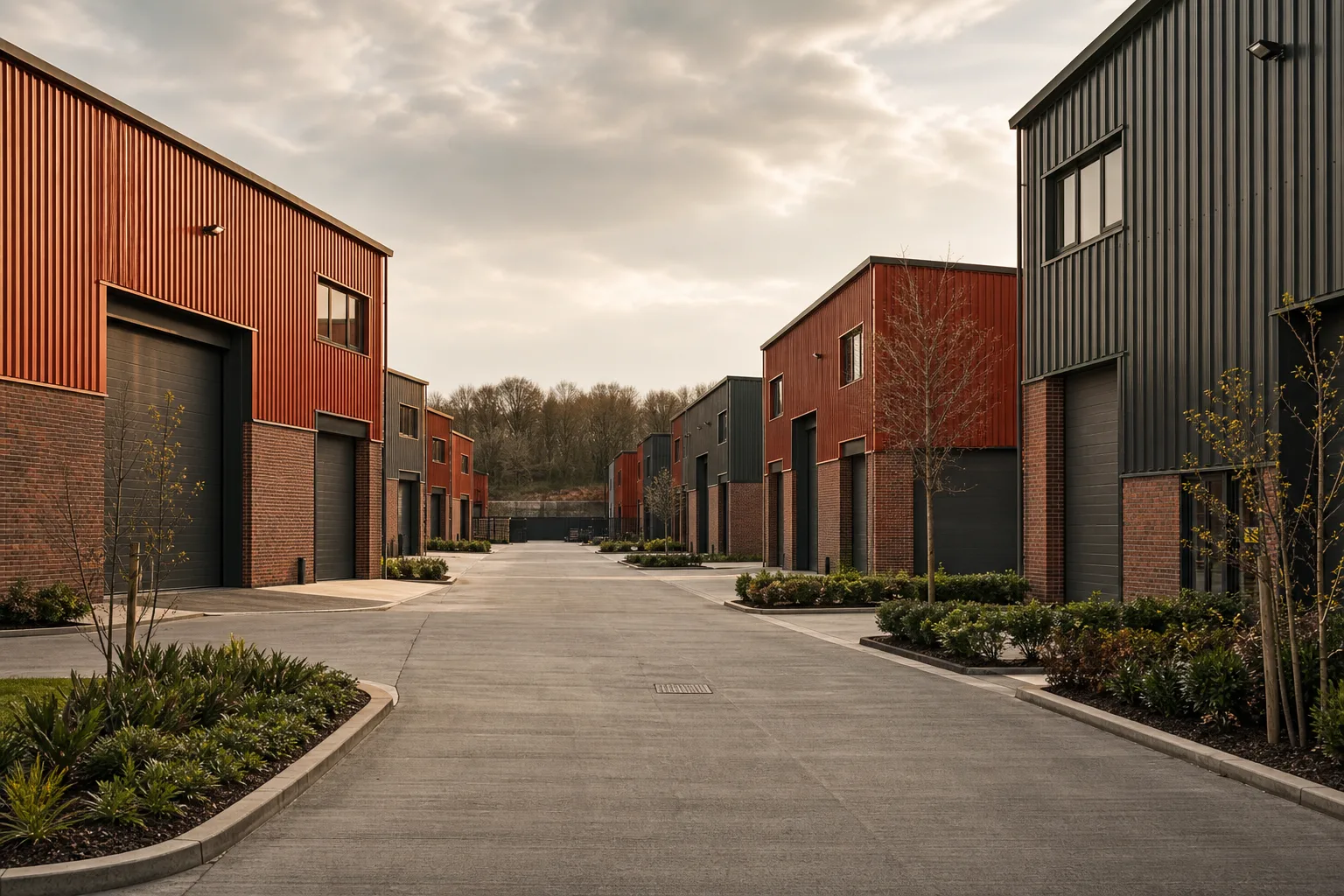
Leasehold can be the better deal where the unit sits on a well-run managed estate, the lease is long with clean terms, and the price reflects the tenure. Many of the best small-unit estates are held this way, the service charge buys genuinely useful shared infrastructure and management, and a long, sensibly drawn lease funds and behaves much like freehold. The decision then comes down to the specific lease and the specific price, not to a general preference. Where both freehold and leasehold versions of similar units are available, compare the all-in cost of ownership, price plus ground rent plus service charge against price alone, over your intended holding period.
Whichever way the decision goes, the finance works for both, and we arrange commercial mortgages on freehold and leasehold purchases alike, matching the deal to lenders comfortable with the tenure and, for leasehold, with the specific lease. The pillar guide on how to buy an industrial unit covers the wider process, and our acquisition finance page sets out how purchase funding is structured. The one rule that applies to every tenure decision is to read the title or the lease before you commit, not after.
Freehold vs Leasehold Commercial Property: common questions
Is it better to buy freehold or leasehold commercial property?
Neither is universally better. Freehold gives outright ownership, full control, no ground rent and the broadest finance options, and suits a business buying a standalone unit to own long term. A long, clean leasehold on a well-run managed estate can be the better deal where the lease is long, the terms are sensible and the price reflects the tenure, with the service charge buying useful shared infrastructure. The right answer depends on the specific unit, the lease terms, the price difference and your plans, so compare the all-in cost of ownership over your intended holding period.
Is a 999 year lease as good as freehold?
In substance, usually yes, provided the lease terms are clean. With effectively a millennium of term left, the reversion is so distant that the asset appreciates and funds much like a freehold, and lenders advance against it readily. The qualification is the lease terms: an onerous ground rent with aggressive reviews, restrictive use or alterations clauses, or a heavy service charge can erode value even on a very long lease. A 999 year lease at a peppercorn rent with sensible covenants is genuinely freehold-like; one with escalating ground rent is not.
Do you pay stamp duty on freehold commercial property?
Yes. Stamp duty land tax applies to freehold commercial property at the UK non-residential rates: nothing on the first £150,000, 2 percent to £250,000 and 5 percent above. Leasehold purchases are also chargeable, with duty calculated on the premium paid for the lease and, for new leases, an additional charge based on the net present value of the rent over the term. Scotland and Wales use their own taxes with different bands. Our commercial stamp duty calculator works out the figure for any price.
What are the drawbacks of a freehold commercial property?
Freehold concentrates all the responsibility and cost on the owner: there is no landlord to maintain shared infrastructure, so the freeholder bears the full cost of the building and, on a standalone site, its roads, drainage and grounds. Freehold units can also cost more to buy than a comparable leasehold, and a single freehold unit gives no access to the managed shared services an estate provides. For a business that wants management handled and shared costs spread, a well-run leasehold estate can suit better, which is why the choice is unit-specific.
Are commercial properties usually leasehold or freehold?
Most single industrial and commercial units in the UK sell freehold, but long leasehold is common on purpose-built managed estates, where one ground landlord retains the freehold of the whole estate and sells the individual units on long leases of 99, 125 or 999 years. So tenure depends on the type of property: a standalone unit is more often freehold, while a unit on a managed multi-let estate is more often long leasehold. The unexpired term and the lease conditions matter far more than the tenure label itself.
Ready to talk about a real deal?
Send us the deal and we will come back with a view on fundability and likely terms within one working day.