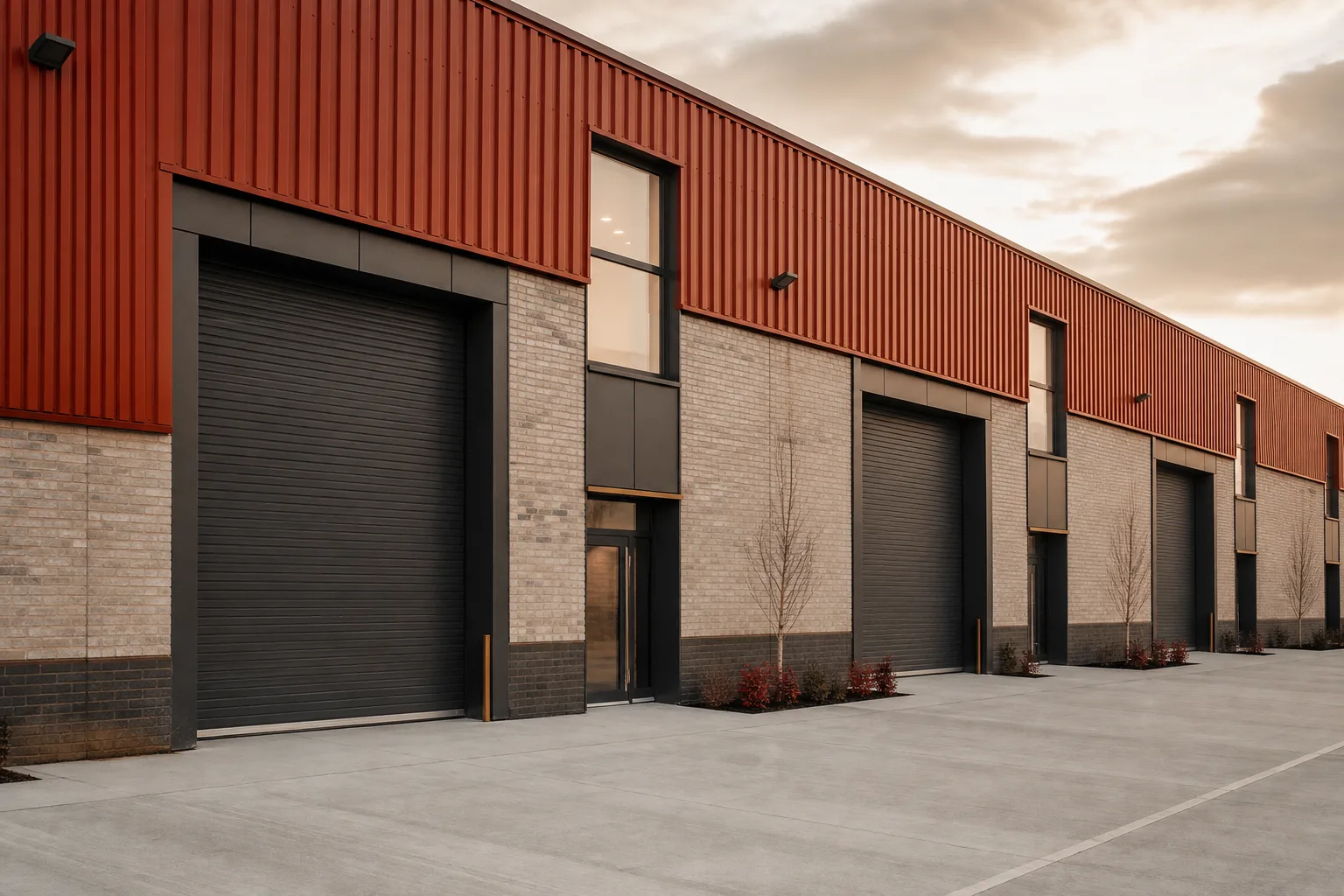
Refurbishing industrial units
Industrial unit refurbishment is the renewal of an existing building, the roof, cladding, floor, services and yard, to bring it back to a standard the letting m

Key takeaways
- Refurbishment renews the roof, cladding, floor, services and yard of a tired unit to a standard the letting market will pay for, and the gap shows up in rent, void length and what a lender will advance.
- MEES makes EPC a legal letting condition: since April 2023 it has been unlawful, subject to exemptions, to continue letting commercial property rated below E, with C and then B the proposed direction of travel during the 2030s.
- Refurbishment bridging at indicative rates from around 0.75 percent per month funds vacant or tired units; heavier schemes shade into development finance at around 65 to 75 percent of project cost.
- The refurb-to-refinance playbook is buy tired, do the works, let at the improved rent, then refinance onto term debt against the new valuation.
- The strategy fails when buyers pay a refurbished price for a tired building: the entry price and an honest works budget decide everything.
Industrial unit refurbishment is the renewal of an existing building, the roof, cladding, floor, services and yard, to bring it back to a standard the letting market will pay for. It is currently one of the most active corners of UK industrial property, for a simple reason: new supply is scarce and expensive, much of the standing stock dates from the 1970s and 1980s, and energy performance rules now put a regulatory clock on buildings that were drifting along in tired condition. The gap between a tired unit and a refurbished one shows up directly in rent, in void length and in what a lender will advance.
This guide covers what a typical industrial refurbishment involves, the EPC and MEES rules driving the spend, the rental uplift case for doing the works, what refurbishment costs in qualitative terms, the funding routes from bridging to capex facilities, and the refurb-to-refinance playbook that turns a dated unit into a revalued, income-producing asset. We arrange refurbishment and refinance funding for industrial owners as a broker and introducer; we are not a lender, and nothing here is financial, tax or legal advice. Every cost mentioned is project-specific until a contractor has priced your building.
What does an industrial unit refurbishment typically involve?
The standard scope starts overhead. Roofs are the defining item on older units: replacing or overcladding worn profiled sheets, renewing rooflights that have gone brittle and opaque, stripping out redundant plant and dealing with any asbestos-containing sheets under controlled conditions. A sound, insulated roof transforms both the EPC position and the letting conversation, because no occupier commits to a building that leaks. Wall cladding follows the same logic, with overcladding or recladding lifting insulation values and, just as importantly, making a 1980s shed look like a building from this decade.
Inside, the floor and the services carry the works. Concrete slabs get repaired, joints recut and resealed, and surfaces power-floated or coated where the incoming occupier type justifies it. Lighting is converted to LED throughout, often the single most cost-effective item in the whole scope for energy performance. Electrical distribution is renewed and capacity checked, heating is replaced or removed depending on the target occupier, and offices and welfare areas are stripped back and refitted to a clean, simple standard.
Outside, doors and yards complete the job. Loading doors are replaced with insulated sectional or roller shutter doors, personnel doors renewed, and the yard resurfaced, drained, fenced, lined and lit. On multi-let estates the same scope extends to estate roads, signage and landscaping, because first impressions price the whole estate, not just the unit being viewed. A well-chosen scope is ruthless about what tenants pay rent for: weathertightness, light, power, access and a yard that works.
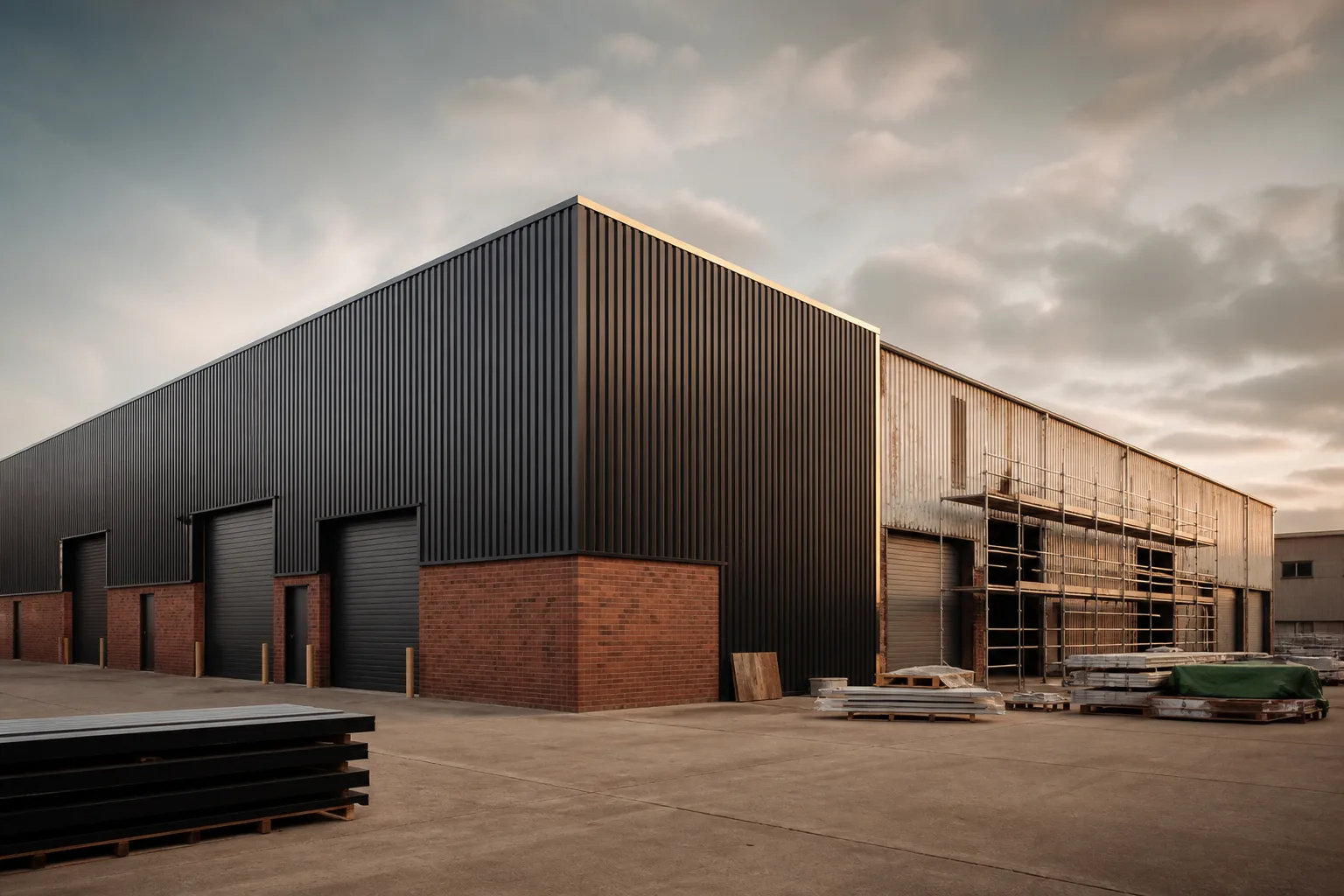
Why are EPC rules driving industrial refurbishment now?
The Minimum Energy Efficiency Standards, MEES, make energy performance a legal letting condition rather than a marketing point. Since April 2023 it has been unlawful, subject to exemptions, to continue letting a commercial property in England and Wales with an EPC rating below E, not merely to grant new leases on one. Government has consulted on tightening the trajectory substantially, with a minimum of EPC C and then B during the 2030s the direction of travel in the consultation proposals; the final dates remain to be confirmed, but the direction is not seriously in doubt.
Older industrial stock is exposed because of how EPCs assess it: single-skin cladding, minimal insulation, fluorescent or sodium lighting and elderly gas heaters are exactly what the methodology penalises, and units of that era routinely assess at D, E or worse. The encouraging flip side is that industrial buildings are among the cheapest commercial assets to improve, since a big simple envelope plus LED lighting plus modern heating, or no fixed heating at all where the use does not need it, moves the rating a long way for a modest cost per square foot relative to offices.
The market now prices the deadline. Valuers flag sub-standard ratings in secured lending reports, buyers discount units that carry a compliance liability, and lenders increasingly ask for an EPC improvement plan as a condition of term debt on older stock. That converts refurbishment from a discretionary upgrade into capex with a date on it, and the owners doing the works on their own timetable, rather than a regulatory or void-driven one, are consistently the ones getting the better outcomes and the better finance terms.
What rental uplift can a refurbished industrial unit achieve?
The uplift case rests on a structural fact about the market: occupier demand is concentrated on good space, and good space is scarce. The financial vacancy rate across institutionally held UK industrial stood at 9.4 percent at December 2025 on the MSCI UK Quarterly Property Index Q4 2025 results, and within any local market the vacancy is not evenly spread: tired units sit, refurbished units let. The first return on refurbishment is therefore void compression, months of rent that would otherwise have been lost, before any headline rent improvement is counted.
The second return is the rent itself. A refurbished unit moves from competing on price at the bottom of the local market to competing on quality nearer the top of it, and in many markets the spread between tired and refurbished rents on comparable units is wide enough to repay the works in a small number of years, particularly on smaller units where the refurbishment cost per square foot is modest against the rent per square foot. Sector rental growth supports rather than makes this case: Gerald Eve's Multi-Let Winter bulletin 2024 forecast UK multi-let rental growth averaging 4.6 percent a year over 2024 to 2028, but the refurbishment premium is earned on top of the market, not given by it.
The third return arrives at valuation. Higher rent, shorter expected voids, a compliant EPC and a reduced capex liability all push value the same direction, and the effect compounds because valuers apply keener yields to better buildings. That is what makes refurbishment a financeable strategy rather than just good housekeeping, and it is the foundation of the refinance playbook covered later in this guide. The same logic applies whether the asset is a single unit of the kind in our small warehouses guide at /property-types/small-warehouses/ or a whole estate refurbished unit by unit as leases roll.
What does an industrial refurbishment cost?
Honestly: it depends, and any figure quoted without a survey is a guess. Refurbishment costs are driven by the condition of the roof, the presence of asbestos, the state of the slab, the extent of office content and the standard being targeted, and two neighbouring units of the same age can produce very different bills. What can be said qualitatively is that the scope scales in recognisable bands: a light refresh of decoration, lighting and doors at the low end; a standard refurbishment adding roof works, recladding or overcladding, services renewal and yard works in the middle; and a deep refurbishment approaching reconstruction, with structural repairs and full strip-out, at the top.
The useful sanity check is the new-build comparator. Building a warehouse from scratch costs £1,100 to £1,220 per sq m, roughly £102 to £113 per sq ft, excluding land, fees and VAT, on Costmodelling Limited's typical UK building costs rebased to April 2026. A refurbishment delivering most of a new unit's lettable quality for a fraction of that figure is the whole economic point of the exercise; a deep refurbishment whose costs creep toward new-build territory deserves a hard question about whether redevelopment is the better answer. Every project should be priced by a contractor or quantity surveyor against a written scope, with a contingency, before any commitment is made.
Two cost items deserve early attention because they ambush budgets. Asbestos is endemic in pre-2000 industrial buildings, in roof sheets, soffits and insulation board, and the survey, management and any removal belong in the budget from day one, not as a mid-project discovery. And external changes, recladding in different materials, new openings, yard reconfiguration, can require planning permission even when the use is unchanged, so take advice from a planning consultant before the scope is fixed, because a retrospective application is the expensive way to learn this.
How do you fund an industrial unit refurbishment?
The funding route follows the state of the asset and the scale of the works. Where a unit is vacant, or is being bought tired with works to follow immediately, refurbishment bridging is the standard tool: a short-term loan, typically 6 to 18 months, secured on the property, often with the works cost funded in staged drawdowns, at indicative rates from around 0.75 percent per month. Bridging suits the gap perfectly because the asset cannot yet support term debt on its income, and the exit, a refinance or sale at the improved value, is exactly what the works create. Our bridging finance page at /services/bridging-finance/ sets out the structure in detail.
Heavier schemes shade into development finance. Where the project involves structural work, extension, subdivision of a large unit into smaller ones, or a whole-estate rolling programme, lenders treat it as light development, funding around 65 to 75 percent of total project cost in monitored stages, at rates from roughly 8 percent a year; see /services/development-finance/ for how those facilities run. The boundary between a heavy refurbishment bridge and a light development loan is blurry, and pricing the same project both ways across a lender panel is part of what a broker is for.
For owners with let, income-producing assets, the gentler route is debt that accommodates the works. Capex facilities within a term loan, retained works allowances, or a modest equity release on refinance can fund a unit-by-unit programme as leases expire, with term money priced from around 6 percent depending on asset and covenant. This is the natural structure for estate owners refurbishing through natural voids rather than all at once. Most lending in this area is unregulated commercial finance; where a loan would be secured on a borrower's home or otherwise regulated by the FCA, different protections apply and we identify that before anything is arranged.
How does the refurb-to-refinance playbook work?
The playbook has four moves, set out below. Our refinance page at /services/refinance/ covers the final move in detail.
Buy tired, with bridging
Acquire a tired unit or estate at a price that reflects its condition, short income and EPC liability, typically funded with bridging because term lenders dislike exactly those features.
Do the works
Run a scope aimed squarely at what tenants and valuers pay for: weathertightness, LED lighting, a compliant EPC, clean offices and a working yard. Nothing the market does not reward.
Let at the refurbished rent
Relet the space at the refurbished market rent, converting the building from a compliance problem into an income stream a term lender can underwrite.
Refinance and release
Refinance onto a term loan against the new valuation, repaying the bridge and, where the numbers have worked, releasing some or all of the equity employed, ready for the next project.
Market conditions have been kind to the strategy of late, with UK industrial delivering cumulative capital growth of 6 percent between the Q1 2024 trough and Q4 2025, the strongest of any property sector on the MSCI UK Quarterly Property Index Q4 2025 results, but the playbook is not a bet on the market: the value is created by the works and the letting, and rising markets merely flatter it. Lenders read these deals exactly that way, underwriting the borrower's delivery record, the works budget and the letting evidence rather than the optimism. We arrange the bridge and pre-agree the refinance appetite at the same time wherever possible, because knowing the exit before committing to the entry is the discipline that separates this strategy from speculation.
What catches owners out mid-refurbishment?
Discovery is the classic one. Open up a forty year old industrial roof and you find what the survey could not see: corroded purlins, failed fixings, asbestos in unexpected places, a slab that breaks up around the joints once the racking is removed. The defences are unglamorous: intrusive surveys before contract, an asbestos refurbishment and demolition survey rather than a basic management survey, a contingency that reflects the building's age, and a contractor experienced in occupied or aged industrial stock rather than the cheapest tender.
Process failures cost as much as physical ones. External alterations and any change of use can need planning permission, and listed estate frontages or local Article 4 directions occasionally bite where owners least expect; take advice from a planning consultant before fixing the design. Building regulations apply to thermal upgrades, structural works and electrics regardless of planning. Where tenants remain in place, access, dilapidations interplay and noise need managing through the lease, and a refurbishment timed against a dilapidations settlement at lease end is often the most efficient version of the whole project, with the outgoing tenant's liability part-funding the incoming works.
Finally, the funding has to match the programme. A bridge sized to the purchase but not the works, a facility with no drawdown flexibility when the scope changes, or a loan term that expires before the reletting completes all turn a sound project into a forced sale. Build the finance around a realistic programme with margin, not the optimistic one, and keep the lender informed as the scope moves, because surprises are cheaper to fund when they are still small. Arranging that headroom in advance is a large part of what we do on refurbishment transactions.
Refurbishing industrial units: common questions
How much does an industrial unit refurbishment cost?
It is genuinely project-specific: the roof condition, asbestos, slab state, office content and target standard drive the bill, so two similar units can cost very different amounts. Scopes run from a light refresh of lighting, doors and decoration, through standard refurbishments adding roof, cladding and services renewal, to deep schemes approaching reconstruction. The sanity check is new-build cost, £1,100 to £1,220 per sq m for warehouses on Costmodelling data rebased to April 2026: refurbishment earns its keep by delivering most of that quality for much less. Get a contractor or quantity surveyor to price a written scope before committing.
What is classed as a major refurbishment?
There is no single legal definition, but the market generally means works going well beyond decoration and repair: roof replacement or overcladding, recladding walls, renewing services and electrical distribution, slab repairs, new loading doors and yard reconstruction, sometimes with subdivision or extension. The distinction matters practically because major works trigger building regulations, often need planning permission for external changes, and shift the funding from a light works allowance toward refurbishment bridging or development style finance with staged drawdowns.
Do I need planning permission to refurbish an industrial unit?
Like-for-like repairs and most internal works generally do not need planning permission, but external changes can: recladding in materially different materials, new openings and doors, extensions, plant, signage and significant yard reconfiguration may all require consent, and conservation areas or Article 4 directions tighten the position. Building regulations apply separately to thermal upgrades, structure and electrics. Take advice from a planning consultant before fixing the scope, because retrospective applications are slow, uncertain and expensive.
What EPC rating does an industrial unit need to be let?
In England and Wales it has been unlawful since April 2023, subject to exemptions, to continue letting commercial property rated below EPC E. Government has consulted on raising the minimum substantially, with EPC C and then B the proposed direction of travel during the 2030s, though final dates were unconfirmed at the time of writing. Older industrial stock with single-skin cladding and old lighting is exposed, but it is also cheap to improve relative to other commercial buildings: insulation, LED lighting and modern or removed heating move ratings a long way.
Can I get a bridging loan to refurbish an industrial unit?
Yes. Refurbishment bridging is a standard product: a short-term loan of typically 6 to 18 months secured on the unit, often with works funded in staged drawdowns, at indicative rates from around 0.75 percent per month. It suits vacant or tired units that cannot yet support term debt, with the exit being a refinance or sale at the improved value. Heavier schemes shade into development finance at around 65 to 75 percent of project cost. We arrange both as a broker and, wherever possible, line up the refinance exit at the same time as the bridge.
Ready to talk about a real deal?
Send us the deal and we will come back with a view on fundability and likely terms within one working day.