
Speculative vs pre-let development: how funding differs
Speculative development finance funds the construction of industrial units before a tenant has committed, on the developer's judgement that demand will be there

Key takeaways
- Speculative development builds units before a tenant is found; pre-let development builds against a signed agreement to lease; build-to-suit builds to one occupier's specification.
- The more letting risk the developer keeps, the harder and dearer the finance: speculative facilities sit at lower leverage and finer terms reward a pre-let.
- Strong occupier fundamentals support speculative building: UK big-box take-up was 25.6m sq ft in 2025, up 22 percent (CBRE, Q4 2025).
- A pre-let de-risks the exit and unlocks keener funding, but ties the scheme to one tenant's covenant, timing and specification.
- Most developers run a hybrid: anchor pre-lets where they can, build the balance speculatively to capture open-market demand.
Speculative development finance funds the construction of industrial units before a tenant has committed, on the developer's judgement that demand will be there on completion. Pre-let development funds a scheme already underpinned by a signed agreement for lease, and build-to-suit sits at the far end, building to a single occupier's exact specification. The three routes are really a spectrum of who carries the letting risk, and that single difference shapes everything about how each is funded.
This guide sets out what separates the three, how lenders price the letting risk in each, what the current occupier market says about building speculatively, and how to choose. It builds on our pillar guide to industrial unit construction costs and the arithmetic in our guide to the industrial development appraisal. We arrange development finance as a broker and introducer, not a lender, and nothing here is financial advice.
What does speculative development mean?
Speculative development means building without a tenant or buyer in place, on the expectation that the finished units will let or sell from the open market. The developer carries the letting risk: if the units are slow to let, finance interest keeps accruing on an empty building and the exit is delayed. The reward for carrying that risk is freedom and upside, the developer is not tied to one occupier's requirements or timetable, and a well-located scheme completing into a tight market can let quickly at full rent.
Speculative building is the engine of new industrial supply, because most occupiers want space now, not in eighteen months' time, and will only sign for a building they can see. A developer who waits for a pre-let on every scheme cedes the deep pool of occupiers who need space on a short horizon. The judgement is whether local demand and the supply pipeline justify the risk, which is exactly what the occupier data is for.
How do speculative, pre-let and build-to-suit funding differ?
Lenders price letting risk directly, so the funding terms move with how much of that risk the scheme has removed. A speculative scheme keeps all of it, and lenders respond with lower leverage, finer scrutiny of the letting assumptions and a closer eye on the developer's track record and cash. A pre-let scheme has removed most of it: a signed agreement for lease with a creditworthy tenant gives the lender a contracted income to underwrite against, which supports higher leverage and keener pricing. Build-to-suit, building to a named occupier's specification under a pre-agreed lease, is keenest of all, because the exit is effectively contracted before the first foundation is poured.
| Feature | Speculative | Pre-let | Build-to-suit |
|---|---|---|---|
| Tenant at the start | None; built for the open market | Signed agreement for lease | Named occupier, bespoke specification |
| Who carries letting risk | The developer | Largely the tenant's covenant | The occupier, from the outset |
| Typical leverage | Lower; lenders cautious on empty exit | Higher; contracted income to lend against | Highest; exit effectively pre-sold |
| Pricing | Dearer, reflecting the risk | Keener than speculative | Keenest of the three |
| Upside to developer | Full open-market rent and flexibility | Capped to the agreed lease terms | Lowest; built to order at agreed terms |
| Main drawback | Empty-building and interest risk | Tied to one tenant's timing and covenant | Least flexible; one occupier dependency |
The practical consequence is that the same site can carry very different debt depending on the route. A developer who can secure even a partial pre-let, anchoring one or two of the larger units, often improves the funding for the whole scheme, because the contracted income reassures the lender about the speculative balance. We model these routes across our lender panel as part of arranging the facility, because the cheapest funding is not always the route that delivers the most value once flexibility is priced in.
When does speculative development make sense?
Speculative building makes sense when occupier demand is deep, new supply is scarce and the developer has the experience and balance sheet to carry a building through to letting. The current market gives a reasonable backdrop on both the big-box and small-unit ends: UK big-box take-up of 25.6m sq ft in 2025, up 22 percent (CBRE, Q4 2025), shows occupiers active at scale, and the chronically short small-unit pipeline supports speculative terraces of the kind covered in our small warehouses guide. Forecast rental growth of 2.7 percent for 2026 (Savills, Big Shed Prospects 2026) gives the patient developer a tailwind rather than a crutch.
It makes less sense where the local market is thin, the supply pipeline is heavy, or the developer cannot comfortably fund an extended void. The discipline is the appraisal: a speculative scheme should carry a realistic letting period and the finance cost of that void in its numbers, not assume day-one occupancy. Where the void risk is uncomfortable, securing a pre-let, even on part of the scheme, is the route that converts an anxious speculative punt into a fundable proposition.
The more letting risk you hand to a tenant before you build, the more leverage and the finer pricing a lender will hand back to you.
How does development finance fund each route?
The underlying facility is the same staged development loan in every case: land drawn at the start, construction funded in arrears against a monitoring surveyor's certificates, interest rolled up, repaid on sale or refinance. What changes is the loan-to-cost the lender will offer and the price. A speculative industrial facility commonly runs at the lower end of the 65 to 75 percent of total cost range, with pricing from roughly 8 percent a year plus fees, while a solid pre-let pushes leverage up and margin down because the lender can underwrite contracted income rather than a letting forecast.
Pre-lets and build-to-suit also change the exit conversation. With a tenant signed, the developer can often pre-agree the refinance onto investment debt, or a forward sale to an investor, before completion, which removes the refinancing uncertainty that sits over a speculative scheme. That certainty is itself worth money, and it is why experienced developers chase anchor pre-lets even at the cost of some open-market upside. Where the developer's cash will not stretch to the speculative deposit, mezzanine or JV equity can fill the gap at a higher cost, and acquiring the site itself is funded through acquisition finance.
Across all three routes the lender underwrites the people as hard as the scheme, and a clean appraisal, a credible contractor and any letting evidence speed both credit approval and every drawdown. You can size facilities against your own numbers with our development finance calculator. Most development lending to companies is unregulated; where a loan would be secured on a borrower's home or otherwise within FCA regulation, different rules apply and we say so at the outset.
Speculative or pre-let: how should you choose?
The choice comes down to four questions: how deep is local occupier demand, how heavy is the competing pipeline, how much void can the developer fund, and how much open-market upside are they willing to trade for funding certainty. A developer with a strong site in a tight market and the balance sheet to carry a void will often build speculatively and keep the upside. One in a thinner market, or with tighter cash, will chase a pre-let and accept capped returns for a contracted exit.
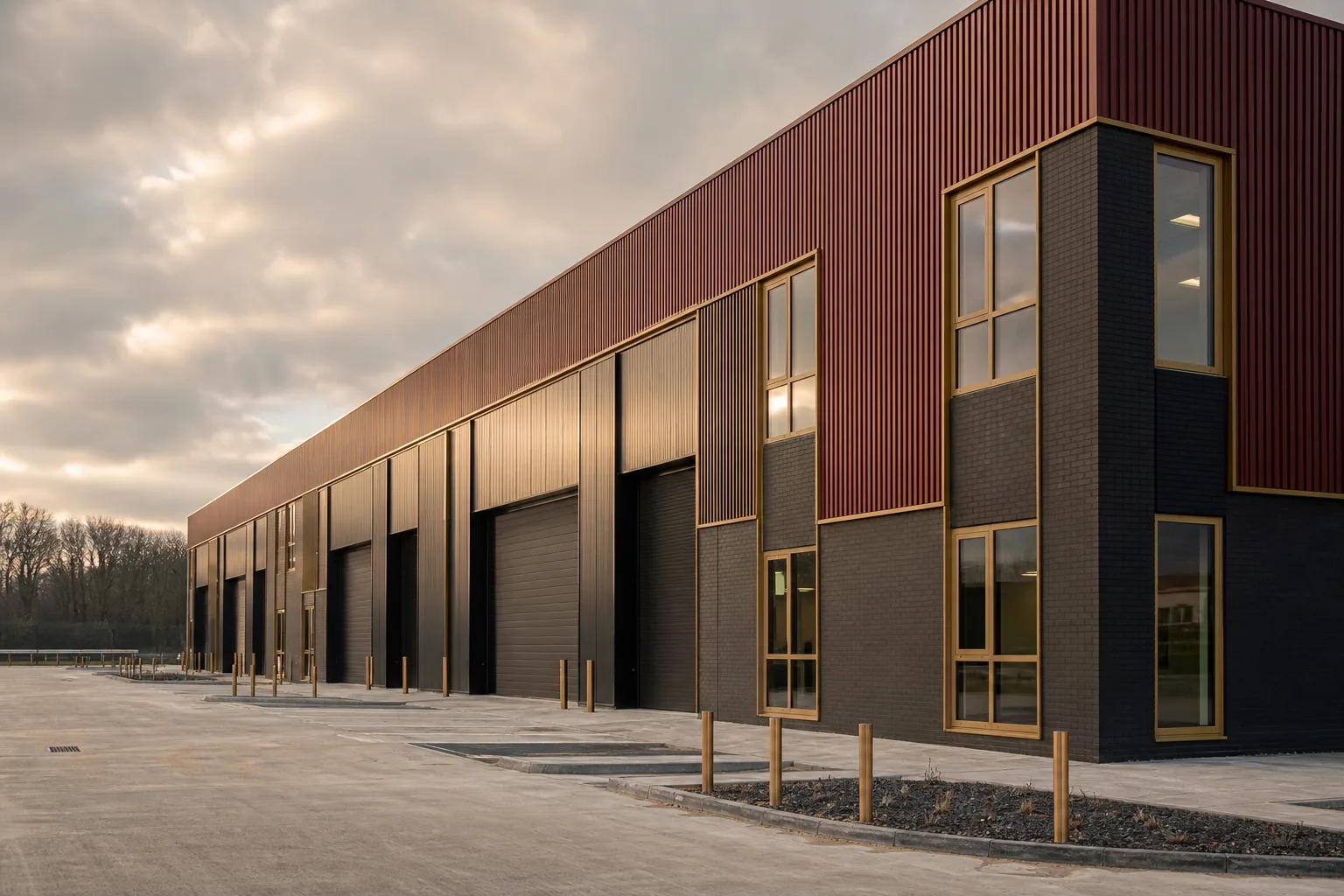
In practice most larger schemes run a hybrid: anchor pre-lets on the units a single occupier wants, build the smaller units speculatively to catch open-market demand, and fund the blend accordingly. That is usually the route that balances funding cost against value, and it is the one we most often help structure. The decision is properly made inside the appraisal set out in our guide to the industrial development appraisal, not as a gut call, and it should be tested for the void and exit-yield risks that bite a speculative scheme hardest. Distribution and logistics schemes carry their own occupier dynamics, covered in our distribution and logistics warehouses guide.
Speculative vs pre-let industrial development: common questions
What does speculative development mean?
Speculative development means building units, in this context industrial units, before a tenant or buyer has committed, on the expectation they will let or sell from the open market once complete. The developer carries the letting risk: if the units are slow to let, finance interest accrues on an empty building. The reward is flexibility and full open-market rent. Speculative building is the main source of new industrial supply, because most occupiers want space ready to occupy rather than waiting for a bespoke build.
What does speculative mean in finance?
In finance, speculative describes an activity undertaken in the expectation of profit but with material risk and no contracted return secured in advance. In property development it means building without a pre-let or pre-sale in place, so the developer is betting on letting or selling the finished scheme into the market. Lenders treat speculative schemes more cautiously than pre-let ones, offering lower leverage and dearer pricing because the exit, the letting, is not yet contracted.
What is an example of development finance?
A typical example: a developer building a £3m terrace of small industrial units takes a staged development facility at around 70 percent of total cost, with the land drawn at the start, construction funded in arrears against a monitoring surveyor's certificates, interest rolled up into the loan, and the whole facility repaid on completion from unit sales or a refinance onto term debt once let. Pricing commonly runs from roughly 8 percent a year plus arrangement and exit fees, keener where a pre-let de-risks the exit.
How much deposit do you need for development finance?
Development finance is sized on loan to total cost rather than a residential-style deposit. Senior facilities commonly fund around 65 to 75 percent of total project cost, so the developer contributes the balance, roughly 25 to 35 percent, as cash or land equity, with a speculative scheme usually at the more conservative end. Mezzanine or JV equity can reduce the cash required by filling part of that gap at a higher cost. The exact contribution depends on the scheme, any pre-let, and the developer's track record.
Ready to talk about a real deal?
Send us the deal and we will come back with a view on fundability and likely terms within one working day.