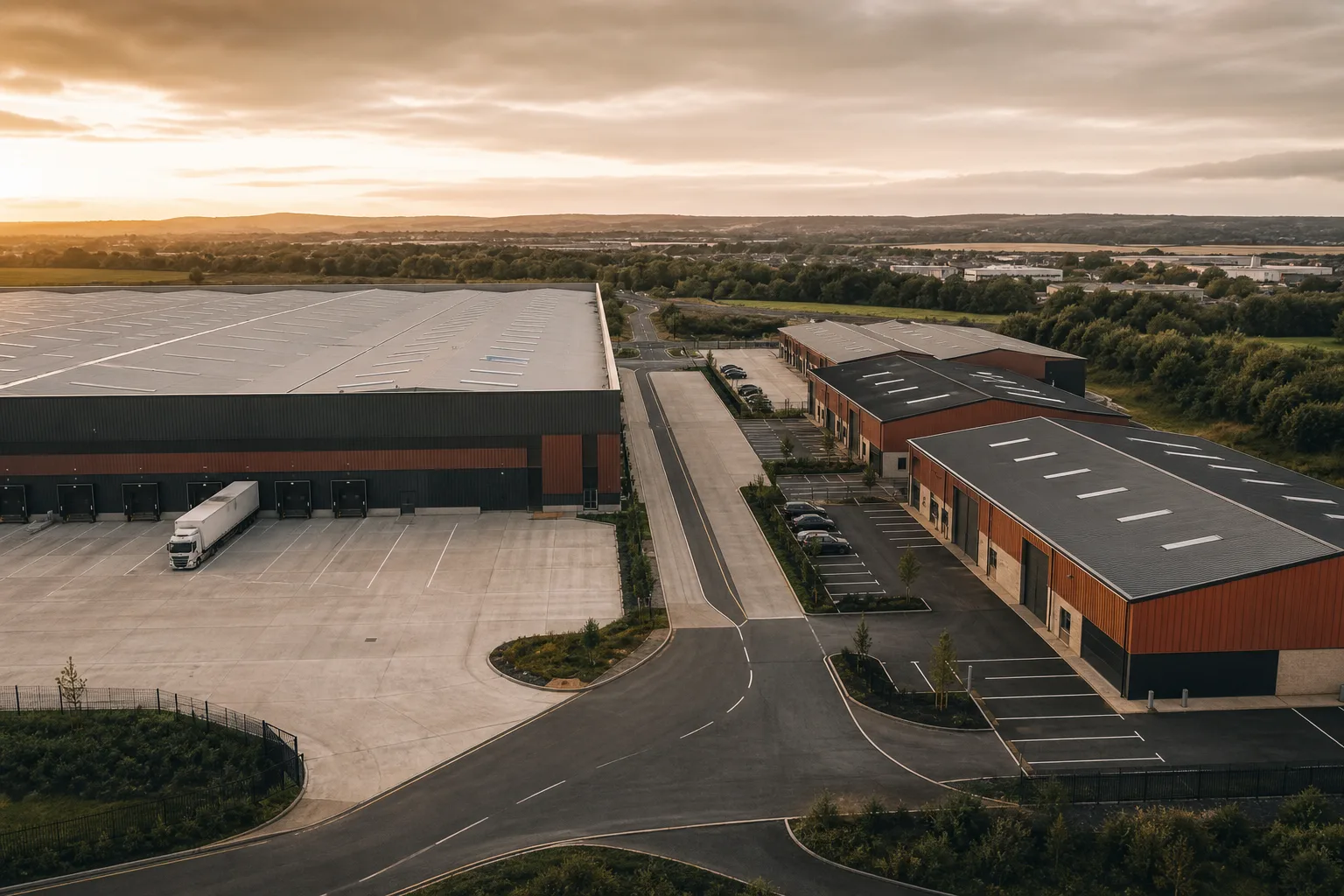
Big-box vs multi-let industrial: which is the better asset?
Big-box and multi-let are the two poles of industrial investment, and the choice between them is one of the first decisions an industrial investor makes. A big-

Key takeaways
- Big-box industrial is single large sheds let to one occupier on a long lease; multi-let is an estate of smaller units let to many tenants on shorter leases.
- Big-box offers simple, long, secure income but concentrated risk in one tenant; multi-let offers diversified income and rental growth but more intensive management.
- Multi-let has shown stronger rental growth, with prime multi-let rent at £15.55/sq ft, up 4.0 percent, against £11.90/sq ft for big-box, up 5.2 percent (Colliers, H2 2025).
- Prime distribution yields were 5.00 percent in January 2026 (Knight Frank); the right choice depends on the investor's appetite for management, income security and growth.
- We arrange finance on both as a broker and introducer, not a lender; nothing here is advice or an offer of finance.
Big-box and multi-let are the two poles of industrial investment, and the choice between them is one of the first decisions an industrial investor makes. A big-box asset is a single large distribution shed let to one occupier on a long lease; a multi-let asset is an estate of smaller units let to many occupiers on shorter ones. They are both industrial property, both bought for income and growth, but they behave so differently in terms of risk, management, growth and finance that they suit different investors and different points in a cycle.
This guide compares the two head to head: what each one is, the tenant and lease differences, the income-security trade-off, rental growth and yields, the management burden, and how finance differs between them. We arrange the debt behind both as a broker and introducer; we are not a lender, and nothing here is financial, tax or investment advice. Both sit within the wider distribution and logistics market, and our guide to industrial property yields underpins much of the pricing discussion below.
What is big-box and what is multi-let industrial?
A big-box industrial property is a single, large distribution or logistics warehouse, typically from around 100,000 sq ft upward, often well over half a million, sited on or near a motorway junction and let to one occupier, a retailer, manufacturer or third-party logistics operator, on a long lease. The investment is simple in shape: one building, one tenant, one rent, usually for a long fixed term. The whole asset rises or falls with that single occupier and that single lease.
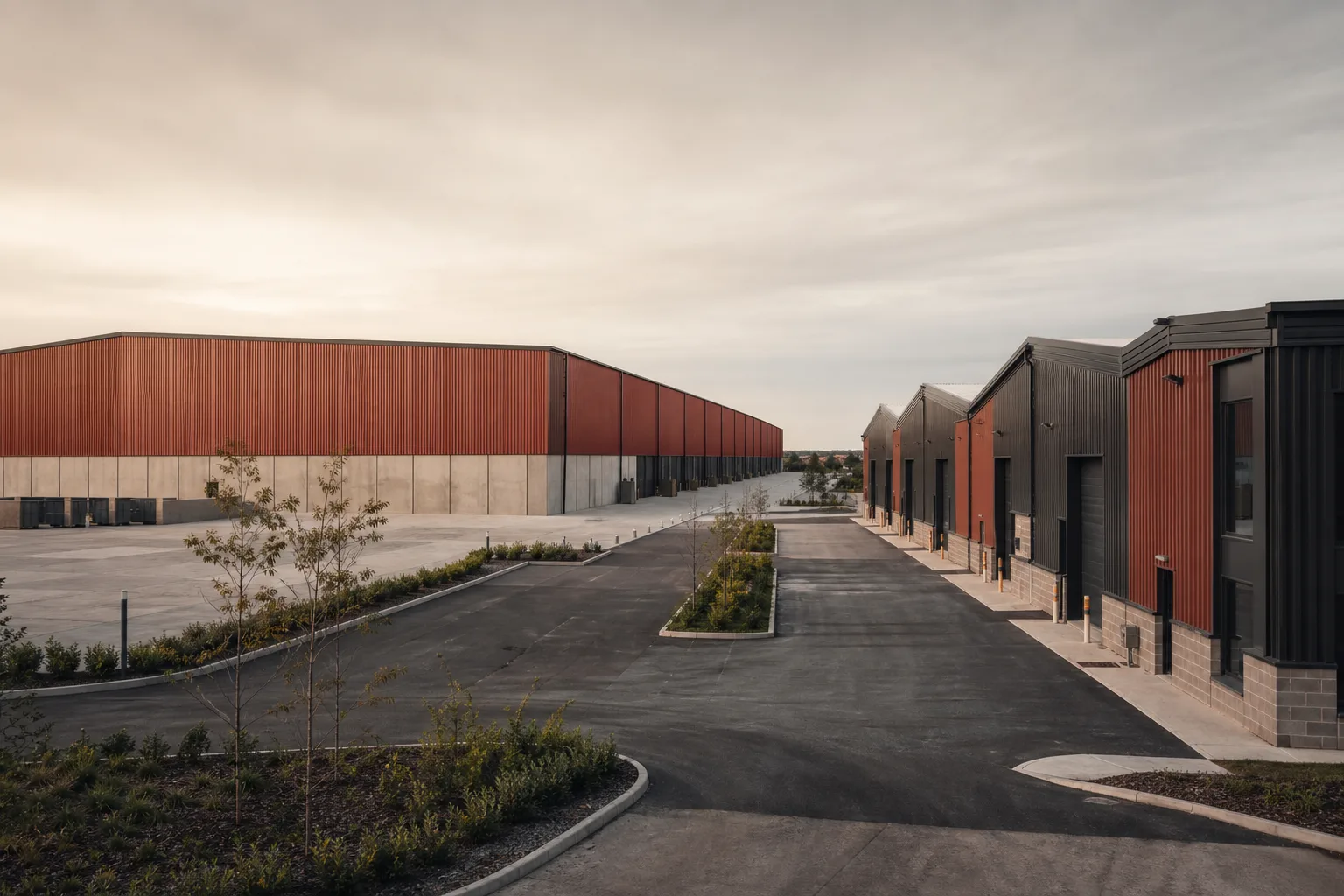
A multi-let industrial estate is the opposite shape: a terrace or cluster of smaller units, anything from a few thousand square feet up to mid-box sizes, let to a range of occupiers on a mix of shorter leases. Tenants might include trade businesses, light manufacturers, distributors, service companies and local SMEs. The income is the sum of many rents from many tenants, and no single occupier dominates. Our multi-let estates page covers this product, and distribution and logistics warehouses covers the big-box end.
| Feature | Big-box | Multi-let |
|---|---|---|
| Typical size | 100,000 sq ft and up | Units from a few thousand sq ft |
| Tenants | One | Many |
| Lease length | Long, often 10 to 20 years | Shorter, often 3 to 10 years |
| Income shape | Single rent | Many rents combined |
| Location driver | Motorway access | Proximity to local demand |
| Management | Light | Intensive |
How do the tenants and leases differ?
Big-box tenants are larger, fewer and signed for longer. A regional distribution centre might be let to a national retailer or a logistics operator on a ten, fifteen or twenty year lease, frequently with fixed or index-linked rent reviews, giving the investor a long, predictable income stream from a strong covenant. The flip side is concentration: the asset depends entirely on that one tenant, and a vacancy means the whole building, and the whole income, is empty at once. The most common lease structure at this end is a long full repairing and insuring lease, where the tenant carries the building costs.
Multi-let tenants are smaller, more numerous and signed for shorter terms, often on three to ten year leases with open-market rent reviews. The covenants are individually weaker, but the income is spread, so the failure of one tenant dents rather than destroys the rent roll. Leases turn over more frequently, which is a double-edged feature: it creates voids and management work, but it also lets the landlord capture rental growth at each renewal far faster than a big-box landlord locked into a long lease can. The most common lease across both is the full repairing and insuring lease, though shorter multi-let leases sometimes shift more cost onto the landlord.
Big-box buys you one strong tenant for a long time; multi-let buys you many ordinary tenants you can re-price often. The choice is really a choice about which risk you would rather hold.
Which gives more secure income?
It depends on what you mean by secure. Big-box income is more secure in the sense that it is long, contractual and backed by a strong covenant: a fifteen year lease to a national operator pays a known rent for a known period with little management, and that certainty is exactly what institutional buyers pay a keen yield for. But the security is concentrated. If that tenant fails or vacates at lease end, the income drops to zero overnight, the building can take a long time to re-let, and a single large void is a major event for the asset.
Multi-let income is less certain line by line but more resilient in aggregate. Any one tenant might leave, and small-occupier covenants are weaker, but because the rent comes from many tenants the loss of one is absorbed by the rest. A multi-let estate rarely goes fully vacant; it experiences a churn of small voids that an active manager re-lets, often at higher rents. So big-box offers depth of security from one strong source, while multi-let offers breadth of security from many ordinary ones, and which is safer depends on whether you fear concentration or churn more.
Which offers stronger rental growth and keener yields?
On recent evidence, multi-let has shown the stronger rental growth, while big-box has held a keener prime yield. Prime mid-box and multi-let rent reached £15.55 per sq ft in the second half of 2025, up 4.0 percent, against prime big-box rent of £11.90 per sq ft, up 5.2 percent (Colliers, H2 2025). The higher rent per square foot on smaller units reflects the deep, supply-starved market for them, and because multi-let leases are short, landlords capture that growth quickly at each renewal, whereas a big-box landlord on a long fixed lease waits years for a review.
On yields, prime distribution and logistics, which is the big-box end, stood at 5.00 percent in January 2026 (Knight Frank, UK Logistics Market Dashboard), reflecting the value the market places on long, secure income from strong covenants. Multi-let has traded at a range of yields depending on location and quality, and tends to offer a higher income return in exchange for more management and weaker individual covenants. The trade is the familiar one: the keener yield buys long, secure income, while the higher-yielding, growth-led asset rewards the investor who will do the work to capture the reversion.
Total return data has favoured the standard, smaller end recently: UK industrial delivered a 7.2 percent total return over the 12 months to December 2025, with standard industrial outside the South East the best performing of all property segments (MSCI UK Quarterly Property Index, Q4 2025). That is the kind of stock that multi-let estates are built from, which is part of why multi-let has attracted growing attention from investors chasing growth rather than pure income security.
How much management does each demand?
This is where the two diverge most in day-to-day reality. A big-box asset on a long full repairing and insuring lease is close to hands-off: one tenant, one rent, the tenant responsible for the building, and little to do between rent reviews. That low management burden is part of the appeal to institutions and passive investors, who can hold a portfolio of big-box sheds without a large asset-management team. The work is concentrated into a few moments: the original letting, the rent reviews and the eventual lease expiry or re-letting.
A multi-let estate is a working business. Many leases mean many renewals, rent reviews, rent collections, service-charge budgets, repairs, void marketing and tenant relationships, all running continuously. That intensity is the cost of the diversification and growth, and it is real: a multi-let estate needs active management, in-house or outsourced, to perform. Investors who enjoy and are set up for that work can add genuine value through it, re-gearing leases, refurbishing units and pushing rents; investors who want a quiet life often find multi-let more demanding than they expected.
The management difference also feeds the finance and the return. Multi-let's higher income return partly compensates for the work and the cost of doing it, while big-box's keener yield reflects the ease of holding it. Neither is better in the abstract; they suit different investors with different resources and intentions, which is why a candid look at how much management you can actually do is the most useful starting point for the choice.
How does finance differ between big-box and multi-let?
Lenders look at the two assets differently because the income is shaped differently. On a big-box asset the loan is sized against a single rent from a single tenant, so the lender scrutinises that tenant's covenant and the lease length closely: a long lease to a strong covenant supports higher leverage and finer pricing, but a short unexpired term or a weaker tenant tightens terms sharply, because the whole loan rests on one income. On a multi-let estate the loan is sized against a diversified rent roll, which lenders generally view as more resilient, though they apply a void and re-letting assumption to reflect the churn.
Both are bought with an investment commercial mortgage, and larger or growing holdings of either can be financed through portfolio finance across multiple assets. The interest cover test, rent divided by the stressed interest bill, is the binding constraint on most of these loans, and our guide to industrial yields works through how the yield decides how much debt a purchase supports. You can model the income side with our rental yield calculator.
Most lending against either asset is unregulated; where a loan would be secured on a borrower's home or otherwise falls within the FCA perimeter, different rules apply and the matter is referred to an authorised firm. We model the interest cover and leverage across our lender panel for both asset types as part of arranging the right structure.
Big-box vs multi-let industrial: common questions
What is the difference between big-box and multi-let industrial?
Big-box industrial is a single large distribution shed, usually 100,000 sq ft or more, let to one occupier on a long lease. Multi-let industrial is an estate of smaller units let to many occupiers on shorter leases. Big-box gives long, secure, low-management income concentrated in one tenant; multi-let gives diversified, faster-growing income that needs intensive management. They suit different investors and carry different risks, so the choice depends on appetite for management, growth and income security.
Which is a better investment, big-box or multi-let?
Neither is better in the abstract. Big-box suits investors who want long, contractual income from a strong covenant with little management, accepting concentration risk in one tenant. Multi-let suits investors who want diversified income and stronger rental growth and are willing to do the management. Recent data shows multi-let with strong rental growth at £15.55 per sq ft prime (Colliers, H2 2025) and standard industrial leading total returns (MSCI, Q4 2025), but big-box prime yields are keener at 5.00 percent (Knight Frank, Jan 2026).
What is multi-tenant industrial?
Multi-tenant, or multi-let, industrial is an estate or terrace of industrial units occupied by several different tenants under separate leases, rather than a single building let to one occupier. The landlord collects many rents, manages a service charge across the common areas, and deals with a continuous cycle of lettings, renewals and rent reviews. The diversified income is more resilient to any one tenant leaving, but the estate needs active management to perform.
What is the most common lease used by industrial tenants?
The full repairing and insuring lease, usually shortened to FRI, is the most common in UK industrial property. Under an FRI lease the tenant is responsible for repairing and insuring the building, so the landlord receives a rent net of those costs. On big-box single-let assets the FRI lease is typically long, often ten to twenty years; on multi-let estates it tends to be shorter, and on smaller units some costs may shift back to the landlord through a service charge.
Ready to talk about a real deal?
Send us the deal and we will come back with a view on fundability and likely terms within one working day.