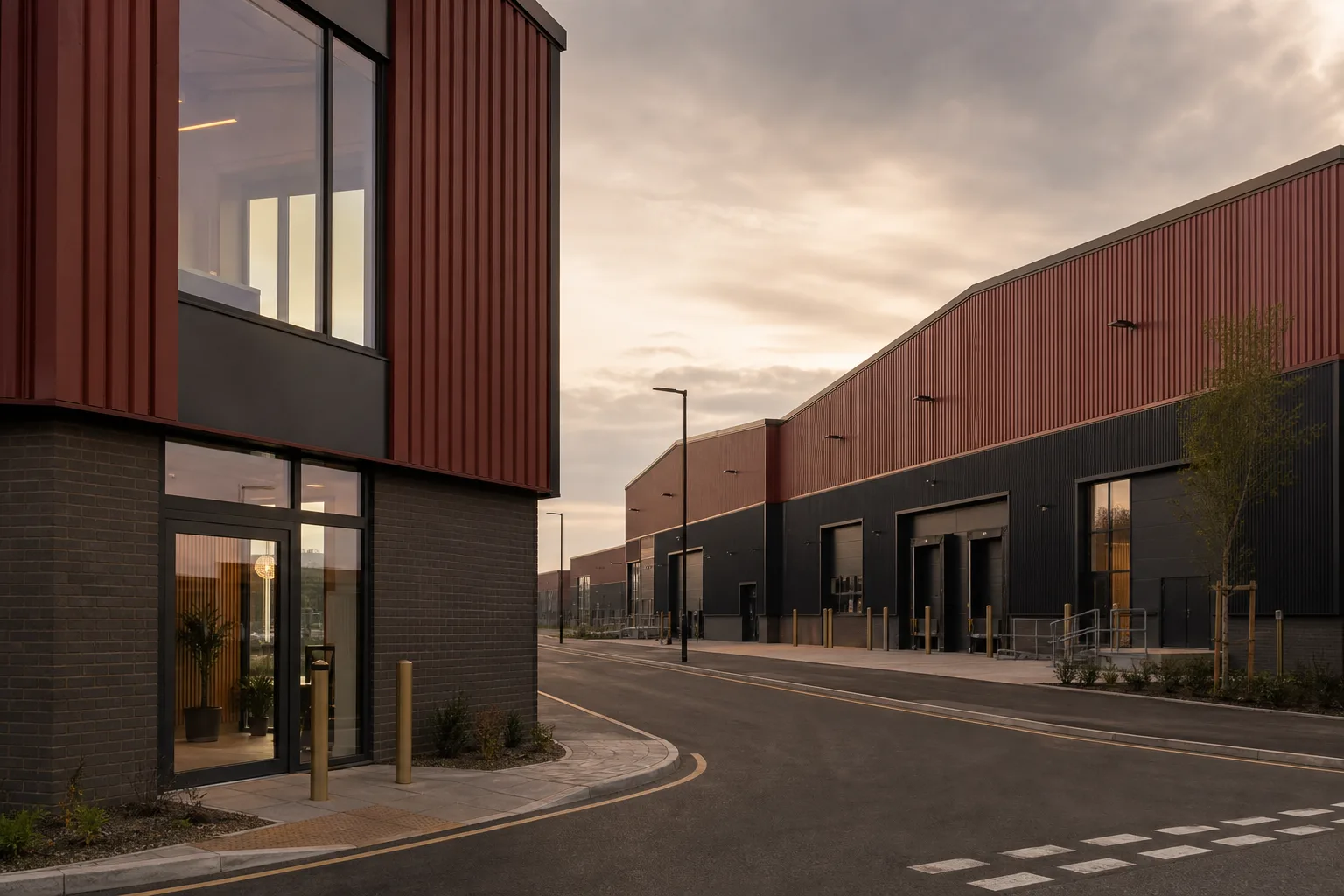
What is urban logistics property?
Urban logistics property is the industrial and warehouse space that sits in or close to towns and cities, serving the population it is surrounded by rather than

Key takeaways
- Urban logistics property is industrial and warehouse space located in or close to towns and cities, serving the urban population it sits among.
- It is prized because urban land is scarce and contested, so well-located stock is hard to replace and tends to hold and grow its value.
- It overlaps with last-mile delivery but is broader, also serving trade, service and regional distribution occupiers who need to be near the city.
- Demand is structural: UK industrial and logistics investment hit £10.5bn in 2025, up 27 percent (Knight Frank), with vacancy at 7.08 percent (CBRE, Q4 2025).
- We arrange finance on urban logistics property as a broker and introducer, not a lender; nothing here is advice or an offer of finance.
Urban logistics property is the industrial and warehouse space that sits in or close to towns and cities, serving the population it is surrounded by rather than the national network. It is the logistics real estate of the city itself: the units that supply local shops, the depots that dispatch deliveries to nearby homes, the trade and service premises that need to be near their customers. As cities have grown and online delivery has spread, this once-overlooked stock has become one of the most sought-after corners of the property market, for a reason that comes down to land.
This guide explains what urban logistics property is and why investors want it, the supply constraints that define the market, the building types involved, how it relates to last-mile delivery, and how these assets are financed. We arrange the debt behind urban logistics property as a broker and introducer; we are not a lender, and nothing here is financial, tax or legal advice. It sits at the dense, city-facing end of our distribution and logistics cluster.
What is urban logistics property?
Urban logistics property is logistics and industrial real estate defined by its location: in or near an urban area, serving the city it sits in. The category covers a range of functions, from last-mile delivery depots and small distribution units to trade-counter premises, service businesses and regional distribution that needs to be close to the population it serves. What ties them together is not the building type or the operation but the place: urban logistics is logistics that has to be near people, and that proximity is the whole value proposition.
It is best understood against its opposite. Big-box regional distribution sits out on cheap land at motorway junctions, where the priority is space and trunk-road access and the cost of land is low. Urban logistics sits on the expensive, contested land inside and around towns, where the priority is closeness to the end customer and land is scarce. The two serve different stages of the supply chain, and urban logistics serves the stage closest to the consumer, which is why it has grown with the shift to home delivery.
| Feature | Urban logistics | Big-box regional distribution |
|---|---|---|
| Location | In or near towns and cities | Motorway junctions, cheaper land |
| Priority | Closeness to the customer | Space and trunk-road access |
| Land cost | High and contested | Low |
| Supply chain stage | Closest to the consumer | Regional and national flow |
| Supply | Scarce, hard to replace | More land available to develop |
Why do investors want urban logistics?
Investors want urban logistics because it combines strong, structural demand with constrained supply, which is the classic recipe for durable rental growth and value. Demand comes from the shift to online ordering, the push for faster delivery, and the need for resilient, local supply chains, all of which pull logistics activity toward the city. Supply is held back because the land that makes a good urban logistics site is the same land cities want for housing and other uses, so new stock is hard to create and existing stock is hard to replace.
The wider market backdrop supports the case. UK industrial and logistics investment reached £10.5bn in 2025, up 27 percent (Knight Frank, 2025), UK logistics vacancy stood at 7.08 percent (CBRE, Q4 2025), and rental growth is forecast at 2.7 percent for 2026 (Savills, Big Shed Prospects 2026). The MSCI UK Quarterly Property Index recorded a 7.2 percent total return for UK industrial over the 12 months to December 2025, with standard industrial outside the South East the best performing segment of all property, and that standard, smaller stock is exactly what much urban logistics is built from.
Listed and institutional capital has chased this theme hard, to the point that dedicated urban logistics vehicles have been acquired and consolidated by larger players. The interest is rational: a scarce, income-producing asset that benefits from a long-term structural shift, and that is difficult for competitors to replicate, is exactly what long-term investors look for. The risk is that competition for the best stock compresses yields, so disciplined buyers focus on location quality and sustainable rents rather than chasing the theme at any price.
What constrains the supply of urban logistics?
Supply is constrained by competition for urban land. The sites that work for urban logistics, close to dense population, with reasonable access, are exactly the sites that towns and cities prize for housing, mixed-use regeneration and higher-value commercial development. Over decades, urban industrial land has been steadily lost to those alternatives, and the planning system often favours them, so creating new urban logistics supply is slow, expensive and politically difficult. The result is a structurally tight market where the existing stock holds a scarcity premium.
Cost compounds scarcity. Where urban sites can be developed, the land is expensive, sites are often awkward or contaminated from previous industrial use, and the economics frequently favour building flats over building sheds. Multi-storey logistics, stacking warehouse floors to use scarce land more intensively, has appeared in the most land-constrained cities but remains costly and uncommon in the UK. So the practical reality is that urban logistics supply grows slowly while demand grows steadily, which keeps upward pressure on rents and values for well-located units.
For investors the supply constraint cuts two ways. It underpins the value of stock they already own and makes well-located assets resilient, but it also makes it hard to buy in, because there is little new supply and the existing stock rarely trades cheaply. That is why much of the activity in this market is repositioning, buying a tired but well-located urban unit and upgrading it, rather than ground-up development, and why the finance structures that support repositioning matter so much here.
What building types count as urban logistics?
Urban logistics is a location category, not a building type, so it spans a wide range of stock. Much of it is ordinary industrial and warehouse space, often older multi-let estates and standalone units inside or near towns, valued for where they sit rather than for any special specification. Some is purpose-built modern logistics on the rare available urban sites, designed for efficient van and lorry movement. And some is repurposed: former industrial buildings, retail warehouses or other premises converted to logistics use because the location is right.
Because the category is so broad, it overlaps heavily with multi-let industrial estates, which our multi-let estates page covers, and with the smaller end of distribution and logistics warehouses. A multi-let estate on the edge of a city is, in practice, an urban logistics asset, serving local trade, service and distribution occupiers, even if it was never marketed under that label. That overlap is part of why so many investors find they already hold urban logistics exposure through ordinary industrial holdings.
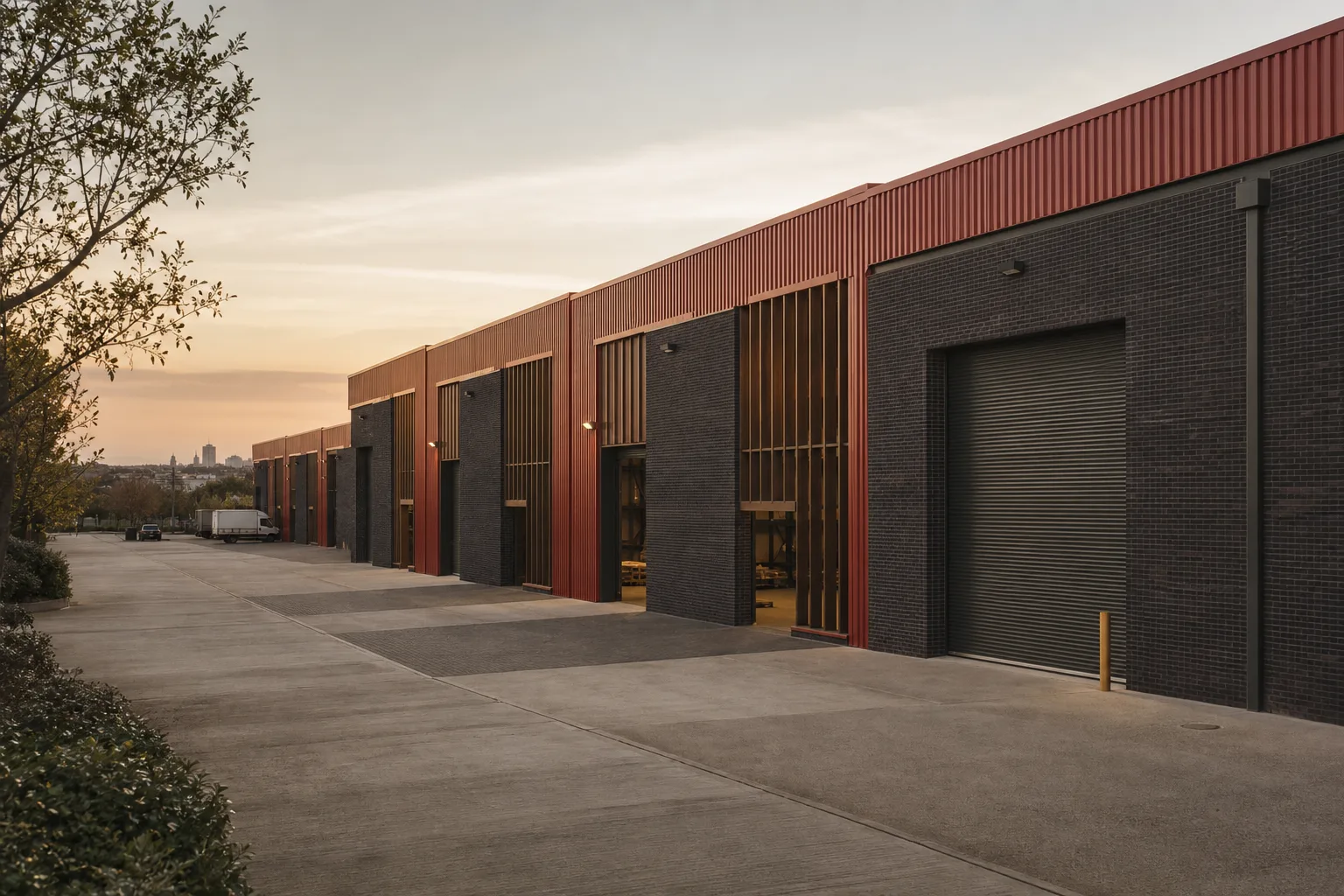
The common requirement, across whatever building, is access and adaptability. An urban logistics unit needs to be reachable by the vehicles its occupier uses, at the times they operate, and flexible enough to serve a delivery operator, a trade business or a distributor as demand shifts. Buildings that are well located but too constrained in access or yard to serve modern logistics let at a discount, which is exactly the gap that repositioning seeks to close.
How does urban logistics relate to last-mile delivery?
Urban logistics is the broader category and last-mile delivery is a use within it. Last-mile property is specifically the stock that handles the final leg of delivery to the customer's door, which by definition needs to be urban or near-urban, so last-mile property is a subset of urban logistics. But urban logistics also includes property serving functions that are not last-mile: trade counters supplying local builders, service depots, regional distribution that needs to be near the city, and light industrial occupiers who simply need an urban base. Our last-mile logistics property guide covers the delivery subset in full.
The distinction matters for resilience. A unit that depends entirely on one delivery operator's last-mile model carries that operator's risk; a well-located urban unit that can serve last-mile, trade or distribution occupiers interchangeably is more resilient, because demand can come from several directions. That flexibility is one reason ordinary, adaptable urban industrial stock has proved such a durable asset: it is not betting on a single use, only on the enduring value of being near the city.
In practice the two terms are often used together, and for good reason, since the growth of last-mile delivery is one of the biggest drivers of urban logistics demand. But an investor analysing an asset should be clear which they are buying: a flexible urban logistics unit with many possible occupiers, or a specialised last-mile facility tied to a particular operator and model. The first is generally the more resilient proposition, the second potentially the higher-specified one.
How is urban logistics property financed?
Urban logistics property is financed like the rest of the industrial sector, with the emphasis shifted toward location and adaptability. A let urban unit is bought with an investment commercial mortgage, sized against the rent through an interest cover test, while an occupier buying their own urban base uses an owner-occupier mortgage sized on the business. Lenders read the location as a strength, because well-placed urban stock re-lets readily, but they look hard at the building's adaptability and energy rating, since a constrained or poorly performing unit narrows the occupier pool.
Because so much activity in this market is repositioning rather than buying finished assets, short-term finance plays a large role. An investor buying a tired but well-located urban unit to upgrade it commonly uses acquisition finance or a bridge to fund the purchase and works, then refinances onto a term commercial mortgage once the building is improved and let. Where the play involves building or substantially redeveloping on a scarce urban site, development finance funds the construction in stages. Our guide to financing a distribution warehouse works through these routes in detail.
Most lending against urban logistics is unregulated; where a loan would be secured on a borrower's home or otherwise falls within the FCA perimeter, different rules apply and the matter is referred to an authorised firm. Because these assets turn on location and the durability of the rent, we spend the underwriting conversation on exactly those points when arranging terms across our panel of lenders. You can model the income side first with our rental yield calculator.
What is urban logistics property?: common questions
What is urban logistics?
Urban logistics is logistics and industrial property located in or close to towns and cities, serving the urban population around it rather than the national network. It covers last-mile delivery depots, small distribution units, trade premises and service businesses that all need to be near their customers. The category is defined by location rather than building type, and it is prized because urban land is scarce and contested, which makes well-placed stock hard to replace and supportive of rental growth.
What is a logistics property?
A logistics property is a building used to store, sort or distribute goods as part of a supply chain, from large regional distribution warehouses down to small urban delivery depots. The defining feature is that goods move through it. Logistics property is valued and financed like other industrial property, by capitalising a market rent at a market yield, with the building's location, specification, lease and tenant covenant all feeding into the price and the loan terms available.
What happened to Urban Logistics REIT?
Urban Logistics REIT plc, a listed UK vehicle focused on urban logistics property, was acquired by LondonMetric Property Plc, with the acquisition taking effect in mid-2025. The deal was part of a wider consolidation of urban and last-mile logistics ownership among larger listed property companies, reflecting strong institutional appetite for the sector. This is general market context rather than advice; for current corporate detail, consult the companies' own published information.
Why is urban logistics property so valuable?
Because demand is strong and structural while supply is tightly constrained. The shift to online ordering and faster delivery pulls logistics activity toward cities, but the land that makes a good urban logistics site is the same land prized for housing and other uses, so new supply is slow and expensive to create. Scarce, well-located, income-producing stock that benefits from a long-term structural shift is exactly what long-term investors seek, which supports both rents and values.
Ready to talk about a real deal?
Send us the deal and we will come back with a view on fundability and likely terms within one working day.