Distribution centre vs warehouse: what is the difference?
Distribution centre and warehouse are often used as if they mean the same thing, and in casual conversation they do. In property and supply-chain terms they do

Key takeaways
- A warehouse stores goods; a distribution centre moves them. The difference is purpose, not size, and it shapes the building, the value and the finance.
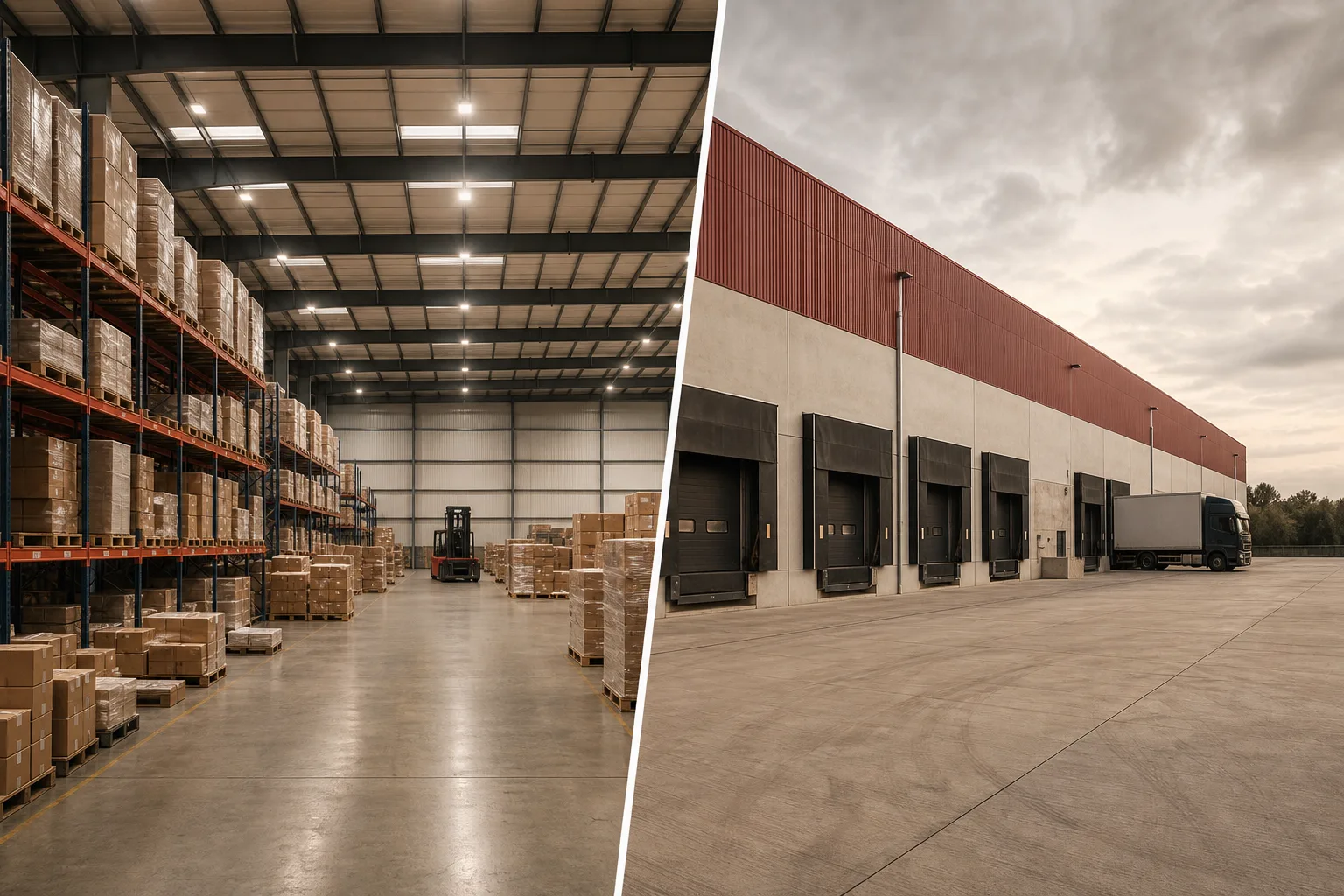
- A distribution centre turns inventory over in days or hours, with many loading doors, deep trailer yards and often automation; a storage warehouse holds stock for weeks with tall racking and fewer doors.
- In UK planning terms both usually sit in use class B8 (storage and distribution), so the two uses are often interchangeable even when the operations are very different.
- Hybrid buildings that do both are common; the label that matters for a lender is the lawful planning use and the lease, not the marketing description.
- We arrange finance on both as a broker and introducer, not a lender; nothing here is advice or an offer of finance.
Distribution centre and warehouse are often used as if they mean the same thing, and in casual conversation they do. In property and supply-chain terms they do not. A warehouse, used precisely, is a building for storing goods; a distribution centre is a building for moving goods on, sorting and dispatching stock rather than holding it. The two buildings can look identical from the road and still be very different machines, and the difference matters the moment you come to value one or borrow against it.
This guide sets out what each term actually means, the operational and physical differences between them, what they share, how the distinction maps onto UK planning use classes, and why all of this feeds directly into value and finance. We arrange the debt behind both kinds of building as a broker and introducer; we are not a lender, and nothing here is financial, tax or legal advice. For the fuller picture of what a distribution shed is, see our pillar guide to distribution warehouses.
Is a warehouse the same as a distribution centre?
No, although the words are used loosely. A warehouse, in the strict sense, is a building whose job is storage: holding inventory securely and cheaply until it is needed. A distribution centre is a building whose job is flow: receiving goods, sorting them and sending them out again with the shortest possible dwell time. A useful test is the question, what is this building optimised for? If the answer is holding stock, it is a warehouse; if the answer is moving stock, it is a distribution centre, even if some goods sit still for a while inside it.
The confusion is understandable because a distribution centre contains a warehouse function and a warehouse can do some distributing. But the dominant purpose differs, and so does everything built around it. The retailer that stores seasonal stock for months runs a warehouse; the parcel carrier that sorts millions of items overnight runs a distribution centre. The building reflects which of those two jobs it was designed to do well.
A warehouse is measured by how much it can hold; a distribution centre by how fast it can move goods through. That single difference shapes the building, the rent and the loan.
What is the difference between warehousing and distribution?
Warehousing is the activity of storing goods. Distribution is the activity of moving goods from where they are to where they need to be, which includes receiving, sorting, consolidating and dispatching. A storage warehouse is dominated by static racking and aisles, with goods put away on arrival and picked when ordered, sometimes after long periods. A distribution centre is dominated by inbound and outbound flow, with marshalling areas, sortation and cross-docking, where goods received in the morning may leave the same afternoon.
Inventory turnover is the cleanest single measure of the difference. A storage warehouse may turn its stock a handful of times a year; a distribution centre turns it many times more, sometimes daily. That higher turnover drives a different building: a distribution centre needs far more loading doors, deeper yards for the constant lorry movements, stronger floors and power for handling equipment, and frequently automation to keep the flow moving. A storage warehouse can accept a tighter site and fewer doors because the traffic is lighter.
| Dimension | Warehouse (storage) | Distribution centre |
|---|---|---|
| Dominant activity | Store and hold inventory | Receive, sort and dispatch |
| Inventory turnover | Low; weeks to months | High; days to hours |
| Loading doors | Fewer | Many, mostly dock-level |
| Service yard | Modest | Deep, for HGV circulation |
| Technology | Racking, basic handling | Sortation, conveyors, automation |
| Site priority | Cheap space | Throughput and access |
How does the building specification differ?
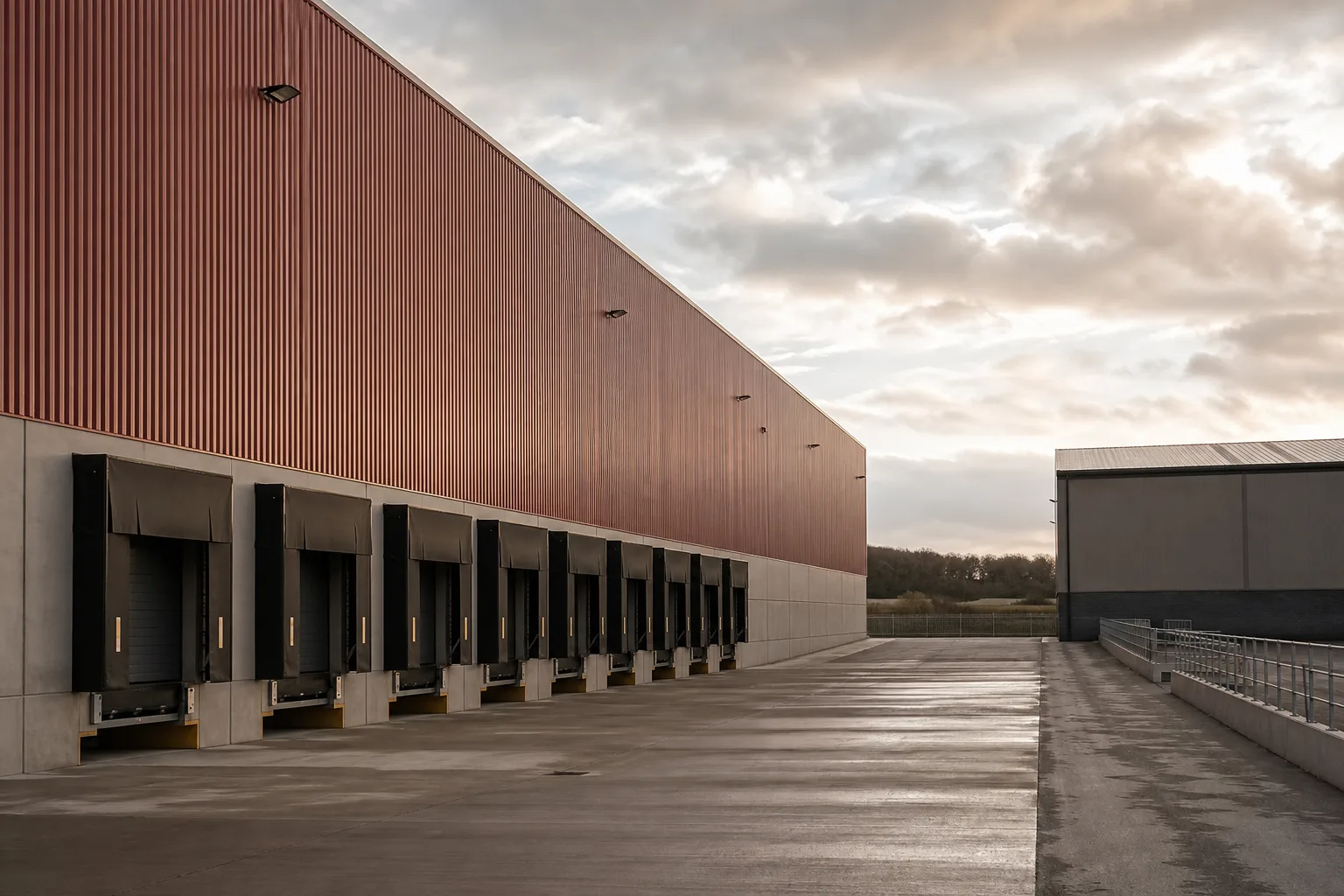
A distribution centre is built for movement, so the specification skews toward doors, height and yards. Expect a high ratio of dock-level loading doors to floor area, deep service yards that let articulated lorries reverse and circulate, clear internal eaves height for racking and mezzanines, a strong, flat floor slab and a generous power supply for conveyors, charging and automation. The yard on a distribution centre is not a leftover; it is part of the working asset, and a shallow yard quietly limits the building however good the shed is.
A storage warehouse can be specified more economically because the traffic is lighter. Fewer doors, a tighter yard and a simpler power supply all reduce cost, while the priority moves to maximising usable cubic space through height and efficient racking layouts. The two specifications overlap, and a well-built modern shed can flex between the roles, but a building designed from the outset as a distribution centre carries cost and value in features a pure storage building would not need.
What do a warehouse and a distribution centre have in common?
More than the contrast suggests. Both are large, single-storey, steel-framed sheds clad in metal panels, sitting on industrial estates or logistics parks, served by HGV access and let to occupiers who need space for goods. Both are valued the same way, by capitalising a market rent at a market yield, and both are bought with the same finance products. From an investor's point of view a let warehouse and a let distribution centre are both income-producing industrial assets, judged on location, building quality, lease and tenant.
They also share a planning home in many cases, which is the practical point that most affects buyers and borrowers. Because storage and distribution both sit in use class B8 in England, the same building can lawfully switch between the two uses without a planning application, so the distinction that matters operationally often does not matter at all in planning terms. A building marketed as a warehouse and one marketed as a distribution centre are frequently the same lawful use under the bonnet.
The overlap is why the terms get used interchangeably and why it usually does no harm. The harm comes only when the loose use of language hides something that affects value: a building sold as a flexible distribution centre that actually has too few doors or too shallow a yard to distribute at scale, or a storage warehouse priced as if it could handle constant lorry traffic. The discipline is to read the building, not the brochure.
Does the distinction matter for UK planning?
Usually less than you would expect, because of how the use classes work. In England, storage and distribution both fall within class B8, so a B8 consent covers a building used purely for storage, purely for distribution, or any mix of the two. A business can move a B8 building from a storage operation to a distribution operation without needing a change of use, which is one reason the two terms are so freely swapped. Our guide to the industrial use classes sets out where B8 sits alongside B2 general industrial and the E(g) business uses.
Where the distinction does start to matter is at the edges. A distribution operation with heavy on-site processing can drift toward general industrial use, B2; a building with significant retail sales to the public can tip outside B8 altogether; and intensification of lorry movements can engage planning conditions written to protect neighbours, controlling hours of use or vehicle numbers. So while the storage-versus-distribution label rarely changes the use class, the intensity and nature of the actual operation sometimes does, and those conditions can quietly narrow what an asset is worth.
For a buyer or borrower the lesson is to check the lawful use and its conditions rather than rely on whether the particulars say warehouse or distribution centre. A valuer values the lawful use, and a lender lends against it, so the planning position is part of the price. We see deals where a building described one way carries conditions that materially affect how it can be run, which is exactly the kind of thing due diligence is for.
How does the difference affect value and finance?
Value follows the rent and the rent follows demand, so a building well-suited to high-demand distribution use tends to command a keener yield and a higher price than a tired storage shed in the same town, even where the planning use is identical. Prime UK distribution and logistics yields stood at 5.00 percent in January 2026, with secondary distribution stock at 6.5 to 7.0 percent (Knight Frank, UK Logistics Market Dashboard, January 2026), and that spread between prime and secondary is, in large part, the market pricing how lettable and modern the building is. A distribution centre with the doors, eaves and yard that occupiers want sits nearer the prime end; a constrained storage box sits nearer the secondary end.
Finance reads the same signals. A lender sizing a loan against a let distribution centre looks at how easily the building would re-let after a default, and a modern, well-specified shed with a deep occupier market supports higher leverage and finer pricing than a dated storage building with a thin market. The product is the same, an investment commercial mortgage sized on the rent through an interest cover test, but the terms differ with the building. For an owner-occupier buying their own depot, the affordability of the business drives the loan, and the building quality drives the security.
The practical takeaway is to look past the label. Whether the particulars say warehouse or distribution centre, the questions that decide value and finance are the same: where is it, how good is the building, who is the tenant, how long is the lease and what is the planning position. Our guide to financing a distribution warehouse works through how those questions translate into a loan, and you can test the income side with our rental yield calculator.
Distribution centre vs warehouse: common questions
Is a warehouse the same as a distribution center?
Not in the strict sense. A warehouse is a building for storing goods; a distribution centre is a building for moving goods through, sorting and dispatching them with minimal dwell time. The terms are used interchangeably because a distribution centre contains a warehouse function and the buildings can look identical, but they are optimised for different jobs, storage versus throughput, and that shapes the specification, the value and the finance.
What is the difference between warehousing and distribution?
Warehousing is the activity of storing goods; distribution is the activity of receiving, sorting and dispatching them onward. A storage warehouse turns its inventory over slowly, holding stock for weeks or months, while a distribution operation turns it over quickly, sometimes daily. The distribution building therefore needs far more loading doors, deeper yards and often automation, where a storage building prioritises cheap cubic space.
What is the difference between an Amazon warehouse and distribution center?
In e-commerce, a fulfilment centre, the kind of large building people associate with Amazon, picks and packs individual customer orders, while a distribution centre or sortation centre moves consolidated goods between sites and out toward the customer. A pure storage warehouse simply holds inventory. The same operator may run all three building types in a network, each specified for its role: storage for depth, fulfilment for picking, and distribution for fast onward movement.
What is the difference between a warehouse and a distribution facility?
A warehouse is generally understood as a storage building, holding inventory until it is needed. A distribution facility is built to move goods on quickly, with the doors, yards and layout to receive, sort and dispatch at scale. In UK planning both usually fall within use class B8, so the difference is operational and physical rather than legal, but it still drives value and the terms a lender will offer because it determines how the building will let to the next occupier.
Ready to talk about a real deal?
Send us the deal and we will come back with a view on fundability and likely terms within one working day.