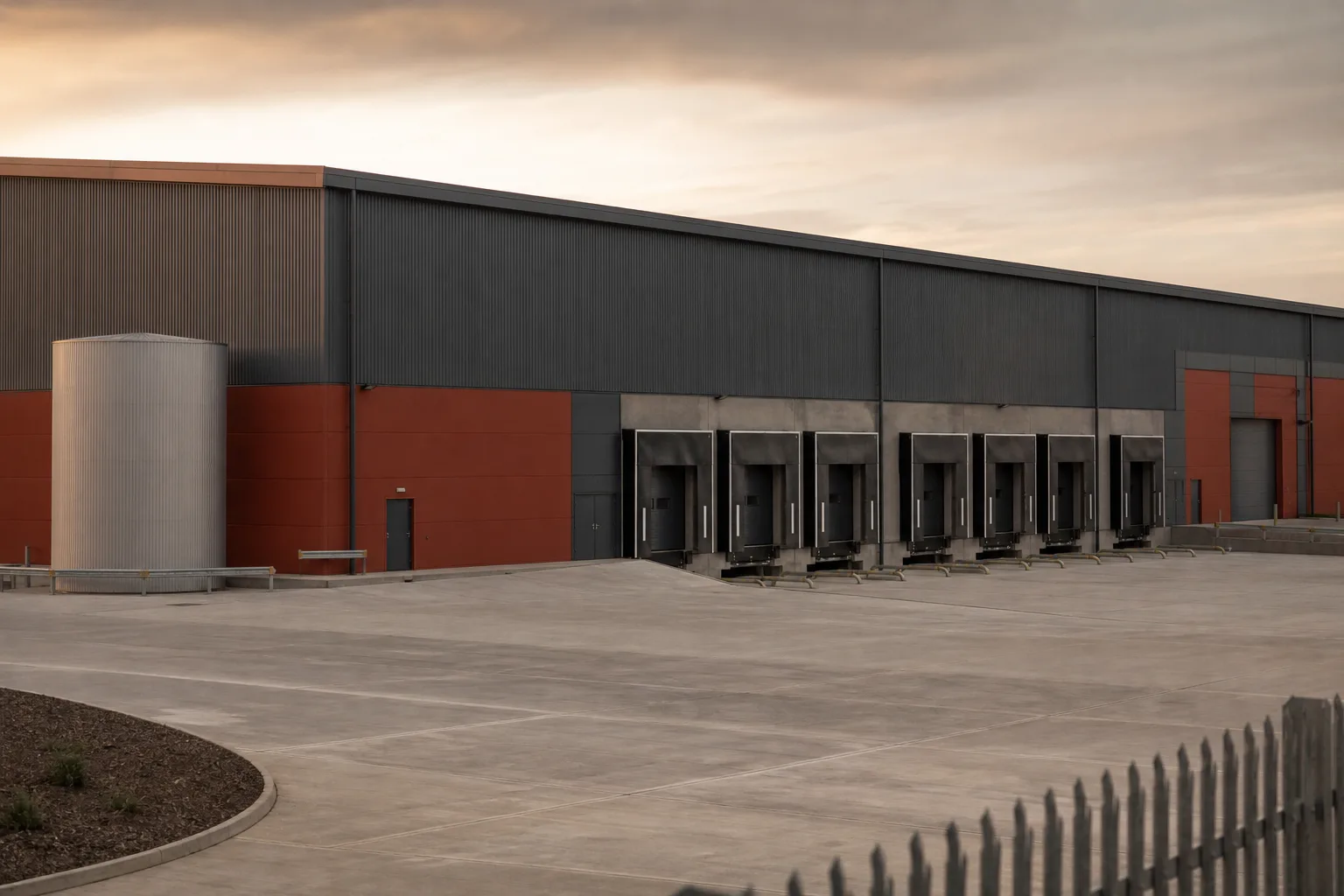
Cold storage warehouse finance in the UK
A cold storage warehouse is a building designed to hold and move goods at controlled low temperatures, chilled or frozen, for food, pharmaceuticals and other te

Key takeaways
- Cold storage warehouses are temperature-controlled buildings for chilled and frozen goods, with heavy insulation, refrigeration plant and high power demand.
- They cost far more to build and run than a standard shed, which changes how lenders approach them: the specialist fit-out is both the value and the risk.
- Finance is available but more conservative, because the building is single-purpose and the plant is costly to replace; covenant strength and lease length matter heavily.
- Routes include commercial mortgages on let or owner-occupied units, development finance for new build, and refurbishment finance to upgrade plant and energy performance.
- We arrange cold storage finance as a broker and introducer, not a lender; nothing here is advice or an offer of finance.
A cold storage warehouse is a building designed to hold and move goods at controlled low temperatures, chilled or frozen, for food, pharmaceuticals and other temperature-sensitive products. It is a distribution warehouse with a demanding extra requirement: every cubic metre has to be kept cold, reliably, around the clock. That requirement transforms the building, the running cost and, crucially for anyone buying or developing one, the way it is financed. Cold storage is one of the most specialised and capital-intensive corners of the logistics property market.
This guide explains what a cold storage warehouse is, why it costs so much more than a standard shed, the risks a lender weighs, the finance routes available, and the practical points that decide whether a deal funds. We arrange the debt behind temperature-controlled property as a broker and introducer; we are not a lender, and nothing here is financial, tax or legal advice. It sits within our wider distribution warehouse cluster as the specialist, temperature-controlled category.
What is a cold storage warehouse?
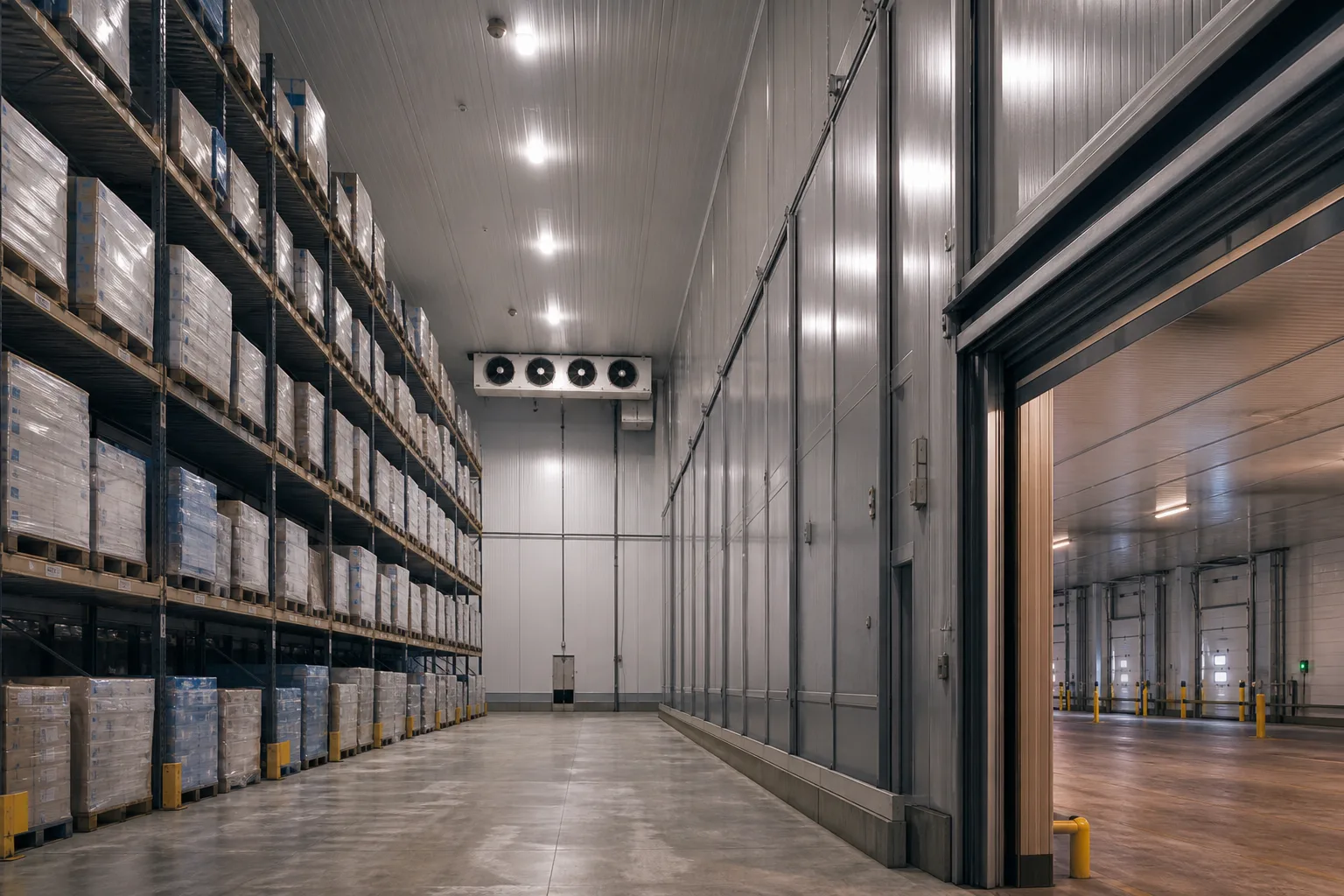
A cold storage warehouse is a temperature-controlled building used to store and distribute perishable or temperature-sensitive goods, holding them at anything from chilled fresh-food temperatures down to deep-frozen. It is a distribution warehouse in purpose, receiving, holding and dispatching goods, but with the whole internal environment refrigerated. That makes it a fundamentally different building from a standard dry shed: it carries heavy insulation, specialist doors and seals, refrigeration plant, backup power and control systems, all of which exist solely to maintain temperature and none of which a dry warehouse needs.
The occupiers are specialist too: food producers and retailers, frozen-food distributors, pharmaceutical and life-science businesses, and third-party logistics operators who run temperature-controlled networks. Demand is underpinned by the food supply chain and by growth in chilled and frozen ranges, and increasingly by pharmaceutical cold-chain requirements. Because the buildings are expensive and specialist, the market is smaller and more concentrated than the dry-warehouse market, and the assets are correspondingly less liquid, which is the first thing that shapes how they are financed.
Why does cold storage cost more than a standard warehouse?
The building itself costs substantially more to construct. On top of the standard steel-frame shell, a cold store needs thick insulated panels throughout, vapour-sealed construction, insulated floors with under-slab heating to prevent frost heave, specialist refrigeration plant, rapid-action insulated doors, and standby power so that a grid failure does not spoil the contents. Where a standard warehouse build runs at roughly £540 to £660 per sq m for large sheds and £1,100 to £1,220 per sq m for smaller warehouses and stores (Costmodelling, April 2026), a temperature-controlled facility carries the refrigeration and insulation cost on top, which is a major addition rather than a marginal one. Our construction costs guide sets out the dry-build baseline.
Running cost is the second difference, and it is permanent. Refrigeration is energy-intensive, so a cold store consumes far more power than a comparable dry warehouse every hour it operates, and energy prices feed straight into the occupier's cost and therefore into the rent they can afford and the covenant they present. Maintenance is heavier too, because refrigeration plant needs servicing, eventual replacement and resilience against breakdown. These ongoing costs are part of why cold storage is a specialist business and why lenders look closely at the occupier's ability to sustain them.
The third cost is replacement risk. Refrigeration plant has a finite life and represents a large share of the building's value, so an owner faces significant future capital expenditure to keep the facility operating, and a buyer has to price the remaining life of the plant into the deal. That capital-intensity is exactly what makes cold storage a higher-stakes asset to own and to lend against than a simple dry shed.
What risks do lenders weigh on cold storage?
The central risk a lender weighs is single-purpose specialism. A dry warehouse can re-let to almost any industrial or logistics occupier; a cold store is built for temperature-controlled use and re-lets to a much narrower pool of specialist operators. If the tenant fails, the lender is left with a building that is harder and slower to re-let and whose value depends on the costly refrigeration plant still working. That narrower market makes the asset less liquid, and lenders typically respond with more conservative leverage and closer attention to the exit than they would apply to a standard shed.
The plant itself is the second concern. Because refrigeration represents a large part of the value and has a finite life, lenders look at its age, condition and remaining life, and at the capital expenditure the owner will need to keep it running. A cold store with tired plant nearing replacement is a very different proposition from one with modern, efficient, recently installed systems, and the finance reflects that. Energy efficiency feeds in here too: an efficient facility is cheaper to run, more lettable and worth more, while a poorly performing one carries both higher cost and energy-rating risk.
Covenant and lease therefore carry extra weight. Because the asset depends so heavily on a specialist occupier, the strength of that occupier's covenant and the length and security of their lease do much of the work in getting a cold store financed. A long lease to a strong food or logistics operator can make an otherwise difficult asset bankable; a short lease or a weak covenant on a single-purpose building is where lenders become cautious, and where specialist or higher-cost finance may be the only route.
How is cold storage property financed?
For a completed, let or owner-occupied cold store, the core route is a commercial mortgage, but at more conservative terms than a dry shed. A let facility is bought with an investment commercial mortgage sized against the rent through an interest cover test, with the lender focused on covenant, lease length and plant condition; an operator buying their own cold store uses an owner-occupier mortgage sized on the strength of the trading business, which is often the more straightforward case because the operator both occupies and depends on the building.
New build and major upgrades use staged finance. A developer building a cold store, or an investor adding refrigeration to a shell, uses development finance drawn against construction milestones, with the lender's monitoring surveyor watching the specialist fit-out closely because it is where cost and risk concentrate. Where an existing facility needs new plant or energy-performance works to stay lettable, refurbishment or capital-expenditure finance, often shorter-term, funds the works ahead of a refinance onto term debt once the upgraded building is income-producing.
Acquire or build
Fund the purchase or construction with a commercial mortgage, development finance or short-term acquisition finance, with terms set by covenant, lease and plant condition.
Stabilise the income
Secure a strong occupier on a sound lease; the covenant and lease length do much of the work in making a single-purpose asset bankable.
Refinance onto term debt
Once let and operating, refinance onto a longer-term commercial mortgage at better terms, repaying any short-term facility used to acquire or upgrade.
Across all of these, the specialist nature of the asset means the lender pool is narrower than for dry industrial, and finding the right lender is much of the work. Some mainstream commercial lenders will consider strong cold-store propositions; others sit with specialist lenders who understand temperature-controlled property. We work across that panel to match the asset and the borrower to a lender who will take a sensible view. Our guide to financing a distribution warehouse covers the general routes that underpin these.
What practical points decide whether a deal funds?
The covenant and lease come first. Because a cold store leans so heavily on its specialist occupier, a strong tenant on a long, secure lease is the single most powerful factor in getting one financed, and a weak covenant or a short unexpired term is the most common reason a deal stalls or moves to higher-cost finance. For owner-occupiers, the equivalent is the strength and track record of the trading business that will run the facility. Lenders are lending against the durability of the income or the business, and on a single-purpose asset that durability is everything.
The plant and energy performance come next. A clear, evidenced view of the refrigeration plant's age, condition and remaining life, and a realistic provision for its eventual replacement, reassures a lender that the asset will keep operating and holding value. Modern, efficient plant and a good energy rating both reduce running cost and widen lettability, and the current minimum to let commercial property in England is EPC band E, with the government having consulted on a higher trajectory, so energy performance is a lettability and value question, not just a compliance one. A facility that addresses these points head-on funds far more easily than one that glosses over them.
Finally, the exit. A lender wants to understand how the loan is repaid and how the asset would be sold or re-let if the worst happened, and a credible answer, a strong covenant, a saleable location, a clear refinance path, makes the difference on a specialist building. We help clients build that case before approaching lenders, because a cold-store proposition that anticipates the lender's concerns is one that gets funded. Most lending here is unregulated; where a loan would fall within the FCA perimeter, the matter is referred to an authorised firm.
Cold storage warehouse finance: common questions
Can you get finance for a cold storage warehouse?
Yes, though on more conservative terms than a standard warehouse. Cold storage is a specialist, single-purpose asset with a narrow occupier market, costly refrigeration plant and high running costs, so lenders apply lower loan to value, scrutinise the tenant covenant and lease, and look closely at the plant's condition and the exit. Strong propositions, a sound building let to a good operator on a long lease, are financeable through commercial mortgages, with development finance for new build, often via specialist lenders.
Why do cold storage warehouses cost so much?
Because the refrigeration and insulation are major additions to a standard build. A cold store needs thick insulated panels, vapour-sealed construction, insulated floors, specialist refrigeration plant, rapid-action doors and standby power, all on top of the steel-frame shell. It then costs far more to run, as refrigeration is energy-intensive around the clock, and the plant needs maintenance and eventual replacement. The standard dry-build benchmark is roughly £540 to £660 per sq m for large sheds (Costmodelling, April 2026), with the cold-store fit-out on top.
What are the disadvantages of a cold storage warehouse?
The main disadvantages are cost and specialism. Cold stores are expensive to build and run, the refrigeration plant is costly and has a finite life requiring future capital expenditure, energy consumption is high, and the building is single-purpose, so it re-lets to a much narrower pool of occupiers than a standard shed. That makes the asset less liquid and means a tenant failure is more serious. These same factors make lenders more cautious, which is why covenant and lease strength matter so much.
How much does it cost to build a cold storage facility?
It varies widely with size, temperature regime and specification, so a precise figure needs a proper cost plan. As a starting point, the dry-shell build for a large warehouse runs at roughly £540 to £660 per sq m, and for smaller warehouses and stores at £1,100 to £1,220 per sq m (Costmodelling, April 2026), excluding land, fees and VAT. The refrigeration, insulation, specialist doors and standby power are then a substantial cost on top, which is why a quantity surveyor should price the specific facility rather than relying on a benchmark.
Ready to talk about a real deal?
Send us the deal and we will come back with a view on fundability and likely terms within one working day.